

A diesel intercooler, also called a charge air cooler, is the component that cools compressed air from the turbocharger before it enters the engine. Cooler air is denser, which means more oxygen per combustion cycle and more power without adding fuel. A well-executed diesel intercooler upgrade is one of the most direct ways to boost diesel efficiency, protect your engine from heat damage, and unlock consistent performance under load. Dyno tests on an OBS 7.3L Powerstroke show 30 HP and 75 lb-ft torque from adding an intercooler alone. Those numbers make the case before you even open the hood.
What you need to know before upgrading your diesel intercooler
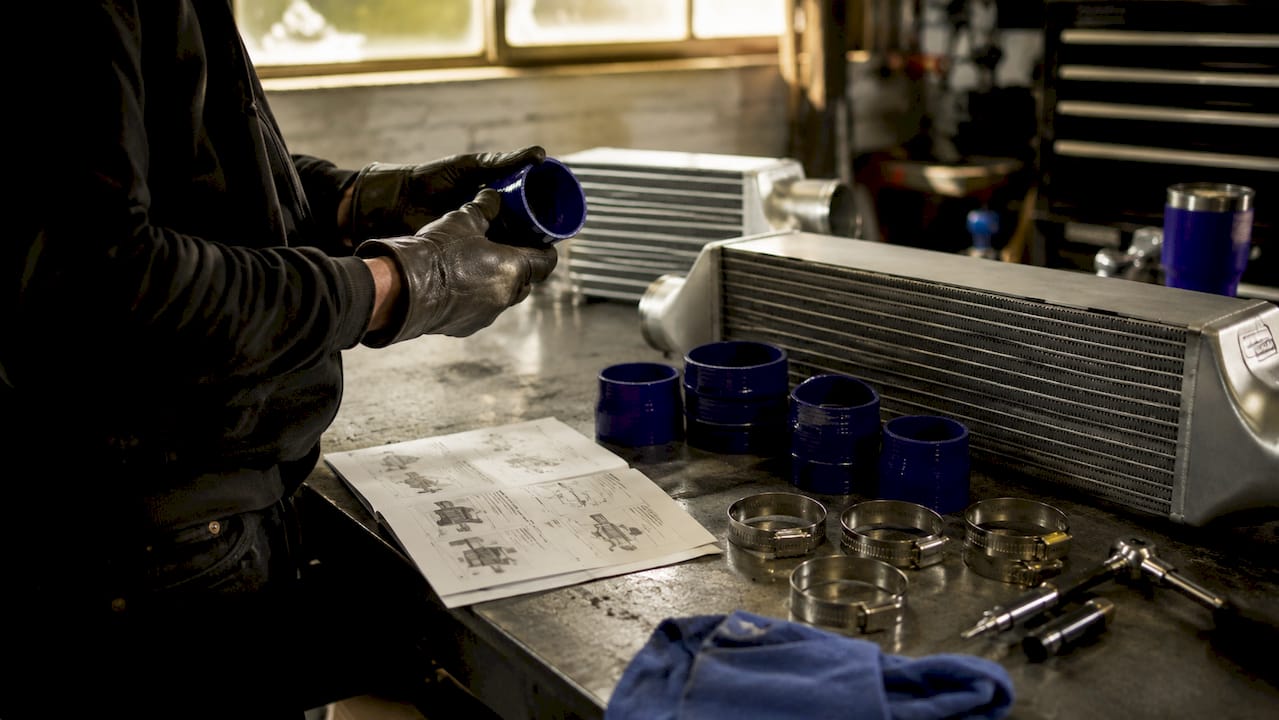
Preparation separates a clean install from an expensive mistake. Before you buy anything, assess your current setup honestly.
Check your engine and boost levels first
Your engine platform determines which intercooler cores fit and what boost pressure the system can handle. A stock Duramax 6.6L running factory boost targets has different needs than a tuned Cummins 5.9L pushing elevated pressure. Know your baseline boost numbers before sizing a replacement core.
Heat soak is the most common complaint in stock diesel setups. The factory intercooler works adequately at moderate loads, but sustained towing or hard acceleration causes intake air temperatures to climb fast. When intake temps rise, the ECU pulls timing and reduces fueling to protect the engine. Power drops, and it does not recover until the engine cools down.
Boost leaks are the second major culprit. Aging pipes, clamps, or boots cause high intake temps just as often as a worn intercooler core. Before spending money on a new core, pressure test your entire charge air system. A smoke machine or compressed air test will reveal leaks in minutes.
Tools and components you will need
Gather these before starting:
- Intercooler core sized for your engine and use case
- Silicone couplers and T-bolt clamps rated for your boost pressure
- Torque wrench and socket set
- Intercooler piping (hot side and cold side) if upgrading beyond a direct-fit core
- Boost pressure gauge or data logger for baseline and post-install comparison
- Smoke machine or compressed air kit for leak testing
| Upgrade type | Best for | Key consideration |
|---|---|---|
| Direct-fit core upgrade | Stock to mild tune | Bolt-on fitment, minimal fabrication |
| Oversized core with stock piping | Moderate power builds | May require coupler adapters |
| Full front-mount intercooler (FMIC) | High-output builds | Requires custom piping and bumper work |
| Side-mount intercooler (SMIC) | Space-limited applications | Lower cooling capacity than FMIC |
How do you choose the best intercooler for your diesel truck?
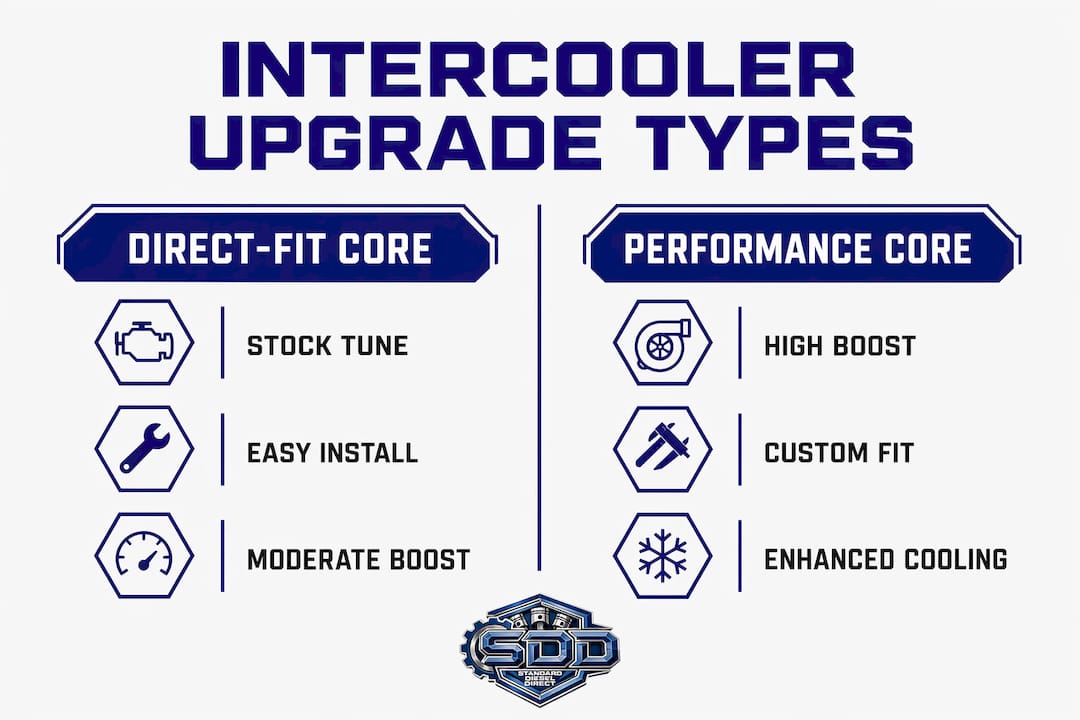
Selecting the right intercooler comes down to four factors: core design, size, material, and tuning compatibility. Getting one wrong wastes money and can hurt performance.
Bar-and-plate vs. tube-and-fin designs
Bar-and-plate cores are the standard choice for diesel performance builds. They use stacked aluminum plates separated by fins, which creates a high surface area for heat transfer and handles high boost pressure without deforming. Tube-and-fin cores are lighter and flow air more freely at lower boost levels, but they are less durable under sustained high-pressure loads. For towing or any application with consistent high boost, bar-and-plate is the correct choice.
Upgraded core designs use larger volume, superior fin geometry, and better materials to lower intake air temperatures more effectively than stock units. That design advantage translates directly to cooler charge air and more consistent power delivery.
Size: bigger is not always better
Larger intercoolers improve cooling but increase turbo lag and add piping volume that the turbo must pressurize before boost builds. For a daily driver or tow rig, an oversized core creates a sluggish throttle response that undermines the power gains. The goal is the smallest core that prevents heat soak under your intended use. That principle keeps throttle response sharp while still delivering the thermal control you need.
Pro Tip: Match your intercooler size to your actual driving profile. A truck used primarily for highway towing needs more cooling capacity than one used for short hauls. Oversizing for a use case you never hit adds weight and lag with no real benefit.
Material and fitment
Aluminum is the standard material for aftermarket intercooler cores. It conducts heat away from the charge air efficiently and handles thermal cycling without cracking. Cast end tanks are stronger than welded units and hold up better under repeated pressure spikes.
Fitment challenges vary by platform. Direct-fit cores for popular platforms like the Ford Powerstroke, Dodge Cummins, and GM Duramax bolt in with minimal modification. Full front-mount setups require custom piping and sometimes bumper or grille modifications. Factor fabrication time and cost into your budget before choosing a front-mount design.
Tuning compatibility matters too. A larger intercooler changes the volume of air the turbo must pressurize, which affects boost response and fueling targets. If you plan to tune after the install, tell your tuner what core you installed before they write the map.
Step-by-step guide to installing a diesel intercooler upgrade
A careful diesel intercooler installation takes two to four hours on most light-duty trucks. Rushing the process causes misalignment and boost leaks that erase your gains.
Installation steps
- Disconnect the battery. Safety first. Disconnecting the negative terminal prevents accidental starts and protects electronics during the install.
- Drain coolant if your intercooler is water-cooled. Most air-to-air setups do not require this, but confirm before you start.
- Remove the factory intercooler piping. Loosen all clamps on the hot-side and cold-side pipes. Label each pipe and coupler so reassembly is straightforward.
- Unbolt and remove the stock intercooler core. Note the mounting bracket positions and hardware. Keep all factory hardware unless the new core includes replacements.
- Test-fit the new core before final installation. Confirm the end tanks align with the piping and the mounting points match the brackets. Adjust brackets if needed.
- Install the new core and torque mounting hardware to spec. Do not overtighten. Aluminum threads strip easily, and cracked end tanks are a common result of excessive torque.
- Reinstall piping with new silicone couplers and T-bolt clamps. Correct alignment and secure connections are critical for long-term performance and longevity.
- Pressure test the full system before starting the engine. Apply 20–25 PSI of compressed air and check every coupler, clamp, and end tank weld for leaks using soapy water.
- Reconnect the battery and start the engine. Let it idle for five minutes and check for unusual noises or boost pressure irregularities.
- Log intake air temperatures and boost pressure on a test drive. Compare against your baseline numbers to confirm the upgrade is working.
Proper installation is not just about getting the core in place. Every coupler, clamp, and connection point is a potential boost leak. One loose clamp at the cold-side outlet can drop boost pressure enough to negate the entire upgrade. Take the time to torque every clamp evenly and test before driving.
| Installation stage | Key action | Tool required |
|---|---|---|
| Disassembly | Remove piping and stock core | Socket set, pliers |
| Test fit | Confirm alignment before bolting | Hands, measuring tape |
| Mounting | Torque core to spec | Torque wrench |
| Piping | Install couplers and clamps evenly | T-bolt clamp driver |
| Leak test | Pressurize system to 20–25 PSI | Compressed air, soapy water |
Pro Tip: Apply a thin layer of silicone lubricant to the inside of each coupler before sliding it onto the pipe. This makes alignment easier and reduces the chance of tearing the coupler during installation.
For diesel owners who want to pair their intercooler work with a full fuel system refresh, the diesel injector install guide at Standard Diesel Direct covers the complementary process in the same level of detail.
How do you troubleshoot performance after upgrading your diesel intercooler?
An intercooler upgrade delivers consistent gains only when the rest of the system supports it. ECU tuning is required to fully exploit the cooler charge air by advancing timing, adjusting fuel mixture, and increasing boost targets. Factory tunes do not account for the improved thermal conditions an upgraded core creates. Without a retune, you leave a significant portion of the power gains on the table.
An intercooler upgrade prevents heat soak during sustained load, which is the defining benefit for towing and hard driving. If you still see intake temperature spikes after the install, the problem is almost always a boost leak or an undersized core for your power level. Pressure test again before assuming the core is at fault.
Common post-install issues and solutions:
- Boost leak at couplers: Retorque all T-bolt clamps evenly. Replace any coupler showing cracks or deformation.
- Intake temps still high under load: Confirm the core size matches your boost level. Consider adding heat shielding around hot-side piping.
- Turbo lag increased noticeably: The core may be oversized for your application. A smaller core or a tune that adjusts boost ramp rate will help.
- Power gains less than expected: Schedule an ECU remap. Quality intercooler upgrades yield 20–40 kW power gains when paired with proper ECU tuning.
- Whistling noise under boost: Check for a loose coupler or a crack in the intercooler end tank. Pressurize the system to locate the source.
Regular inspection of pipes and clamps prevents performance losses before they require major repairs. Check every connection point at each oil change interval. Catching a cracked coupler early costs a few dollars. Ignoring it costs boost pressure, power, and potentially turbo life.
Drivers who tow frequently or run modified power levels get the most from pairing an intercooler upgrade with other proven truck upgrades that address fueling, filtration, and cooling together.
Key takeaways
A diesel intercooler upgrade delivers consistent power gains only when the correct core is selected, installed without boost leaks, and supported by ECU tuning.
| Point | Details |
|---|---|
| Size to your use case | Choose the smallest core that prevents heat soak under your actual driving load. |
| Pressure test before driving | Always leak test at 20–25 PSI after installation to confirm every connection is sealed. |
| ECU tuning is required | Factory tunes do not capture the full power gains from a cooler charge air supply. |
| Bar-and-plate for diesel | Bar-and-plate cores handle sustained high boost better than tube-and-fin designs. |
| Inspect pipes and clamps regularly | Boost leaks from aging couplers cause performance loss before the core itself fails. |
Standard Diesel Direct has the parts your diesel needs
An intercooler upgrade works hardest when the fuel system behind it can keep up. Cooler, denser air demands more fuel to match, and a stock fuel system often becomes the next limiting factor after an intercooler install.
Standard Diesel Direct carries FASS Titanium Signature Series fuel systems built for the most popular diesel platforms. The Titanium Signature Series for Dodge Cummins and the Titanium Signature Series for Ford Powerstroke are engineered to deliver clean, consistent fuel volume at the pressures your upgraded engine demands. Standard Diesel Direct combines technical expertise with direct product support so you can build with confidence, not guesswork.
FAQ
What does a diesel intercooler actually do?
A diesel intercooler cools compressed air from the turbocharger before it enters the engine. Cooler air is denser and contains more oxygen, which increases combustion efficiency and power output.
How much power can an intercooler upgrade add?
Dyno results on an OBS 7.3L Powerstroke show 30 HP and 75 lb-ft torque from adding an intercooler to a non-intercooled setup. With ECU tuning, quality upgrades can yield 20–40 kW of additional power on already-intercooled engines.
Do I need to retune my ECU after installing an upgraded intercooler?
Yes. ECU tuning is required to advance timing, adjust fueling, and raise boost targets to match the cooler charge air conditions the new core creates.
How do I know if I have a boost leak after installation?
Pressurize the charge air system to 20–25 PSI using compressed air and apply soapy water to every coupler, clamp, and weld joint. Bubbles identify the leak location immediately.
What is the difference between bar-and-plate and tube-and-fin intercoolers?
Bar-and-plate cores handle high boost pressure and sustained loads better, making them the correct choice for diesel performance builds. Tube-and-fin cores are lighter but less durable under repeated high-pressure cycles.
Recommended
- How to Install Diesel Performance Injectors: Full Guide – Standard Diesel Direct
- Best Truck Upgrades That Are Actually Worth It – Standard Diesel Direct
- Diesel Lift Pump Performance, Failure, Benefits, Upgrades, and Buying Guide – Standard Diesel Direct
- FASS Titanium Signature Series Diesel Fuel System 290F 260GPH at 45PSI – Standard Diesel Direct