

A diesel particulate filter (DPF) is a device fitted to diesel exhaust systems that captures and removes soot particles before they exit the tailpipe. Without it, diesel engines release fine particulate matter that fails modern emissions standards by a wide margin. Wall-flow DPF technology can remove 85% or more of soot particles, with optimal setups reaching near 100% efficiency and reducing soot emissions to 0.001 g/km or less. That level of filtration is what keeps diesel trucks street-legal and running clean under regulations like Euro 6 and EPA Tier standards. Understanding how the DPF works, how it cleans itself, and what breaks it down is the difference between a long-lived filter and a costly replacement.
How does a diesel particulate filter work to trap soot?
The DPF uses a wall-flow ceramic honeycomb structure to force exhaust gases through porous walls rather than straight through open channels. Alternating channels are plugged at opposite ends, so exhaust gas has no choice but to pass through the porous ceramic walls. Soot particles are too large to pass through and get trapped on the channel walls.
Filtration happens in two stages. The first is deep-bed filtration, where soot particles embed into the pores of the ceramic walls. As soot accumulates, a soot cake layer forms on the channel surface. That cake layer actually improves filtration efficiency for ultrafine particles. The trade-off is increased exhaust backpressure, which is why regeneration is not optional.
- Wall-flow design: Alternating plugged channels force all exhaust gas through porous ceramic walls.
- Deep-bed filtration: Soot embeds into wall pores during the early loading phase.
- Soot cake filtration: A surface layer of accumulated soot captures ultrafine particles more effectively.
- Backpressure buildup: As the cake grows, exhaust restriction increases and engine efficiency drops.
Pro Tip: Flow-through partial filters exist but capture far less soot than wall-flow designs. For street-legal diesel trucks subject to emissions testing, only wall-flow DPFs meet current regulatory thresholds.
What are regeneration processes and why are they vital for DPF maintenance?
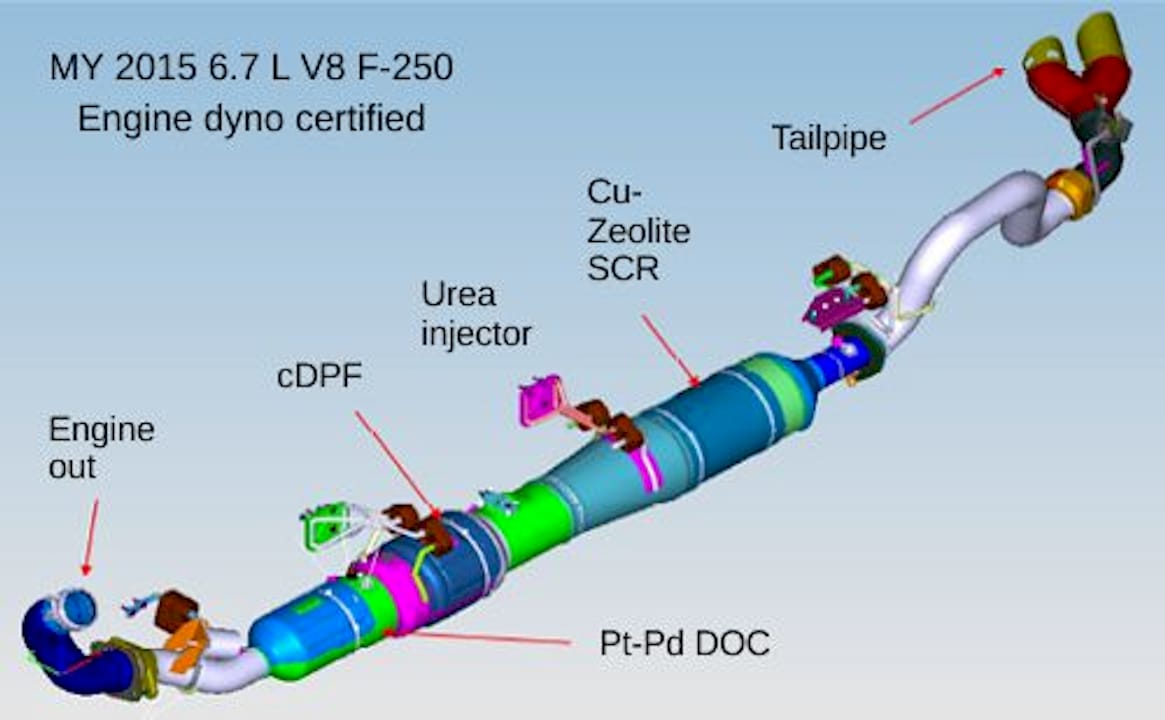
Regeneration is the process of burning accumulated soot out of the filter to restore flow and prevent blockage. Without it, the DPF would clog within a few hundred miles of normal driving. There are two main types: passive and active.
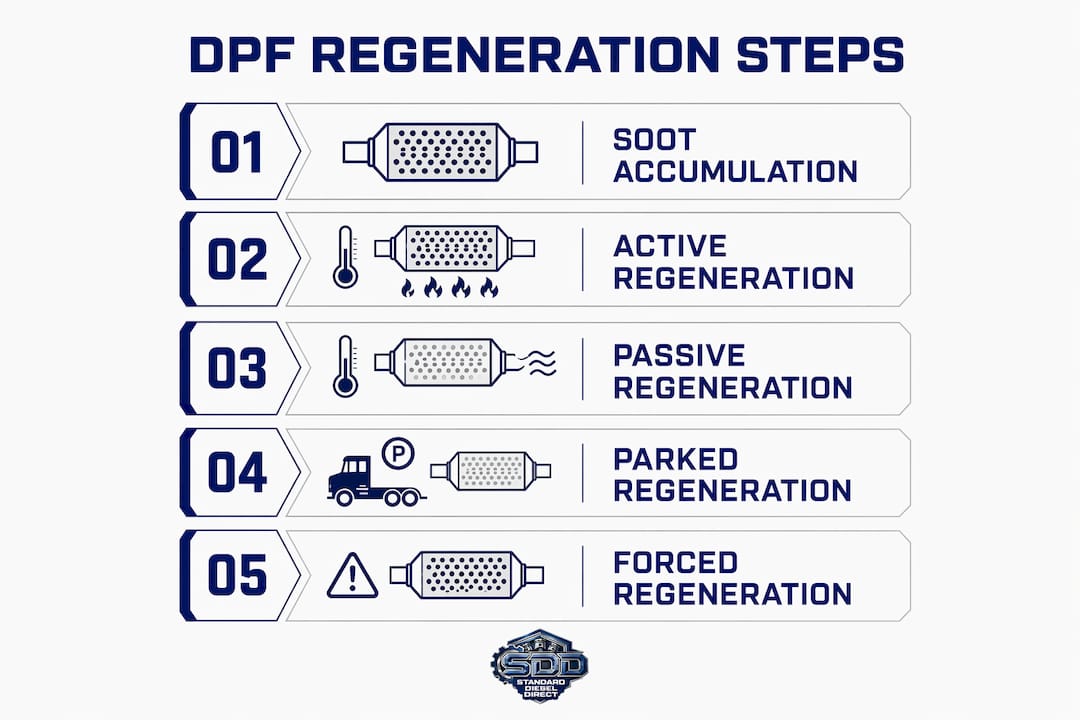
Passive regeneration happens automatically when exhaust temperatures stay high enough to combust soot on their own. Highway driving at sustained speeds generates the heat needed. Soot burns off continuously during these conditions, and the filter stays clean without any intervention from the engine control unit (ECU).
Active regeneration kicks in when the ECU detects that soot loading has reached a threshold. The engine injects extra fuel late in the combustion cycle to raise exhaust temperatures high enough to burn the soot. Regeneration typically occurs every 400 to 800 km, depending on vehicle use and DPF system design. That frequency reflects how quickly soot accumulates under real-world driving conditions.
Fuel additives play a supporting role in active regeneration. They lower the temperature at which soot ignites inside the filter. Fuel additives reduce the soot combustion temperature to approximately 450°C, which makes regeneration faster and less stressful on the ceramic substrate.
- ECU monitors differential pressure across the DPF to estimate soot loading.
- When loading reaches the threshold, the ECU triggers late fuel injection.
- Exhaust temperature rises above the soot ignition point.
- Soot oxidizes and converts to carbon dioxide and water vapor.
- Differential pressure drops, confirming a successful regeneration cycle.
Heavy-duty diesel vehicles use a variation called parked regeneration, which raises engine RPM to approximately 1,400 at idle to generate the exhaust heat needed without moving the vehicle. This is common in fleet trucks that spend long periods idling.
What are common signs of a failing or clogged DPF?
A clogged DPF does not fail silently. The symptoms are clear, and acting on them early prevents a minor cleaning job from becoming a full replacement.
- DPF warning light: The first alert on the dashboard. It signals that soot loading is high and regeneration is needed.
- Reduced engine power: The ECU enters a protective mode that limits power output to prevent damage from excessive backpressure.
- Limp mode: A more severe restriction where the engine runs at minimal power. This happens when the DPF warning is ignored.
- Increased fuel consumption: Active regeneration burns extra fuel. A clogged filter that cannot complete regeneration keeps the engine in a high-consumption state.
- Excessive black smoke: Unburned soot escaping past a damaged or bypassed filter.
Short stop-start journeys are the leading cause of premature DPF blockage. Urban driving rarely generates the exhaust temperatures needed for passive regeneration, so soot builds up faster than the filter can clear it.
Pro Tip: If the DPF warning light comes on during city driving, take the truck onto a highway and hold a steady speed above 40 mph for 20 to 30 minutes. This gives the ECU the conditions it needs to complete an active regeneration cycle.
Ignoring DPF warning lights can cause the ECU to disable regeneration entirely, at which point forced regeneration by a shop or full filter replacement becomes the only option. That repair is significantly more expensive than a highway drive.
How does proper maintenance support DPF health and longevity?
Most DPF problems trace back to driver behavior and maintenance habits rather than hardware failure. The filter itself is durable. What damages it is neglect, wrong oil, and short-trip driving patterns.
- Use low-SAPS engine oil: Low sulfated ash, phosphorus, and sulfur (SAPS) oils produce less non-combustible ash during combustion. Standard engine oils leave ash deposits that accumulate in the DPF and cannot be burned off.
- Change oil on schedule: Old, degraded oil increases ash production and raises the risk of contaminating the filter.
- Use quality diesel fuel: Premium diesel with built-in additives supports cleaner combustion and more effective regeneration cycles.
- Drive at highway speeds regularly: Sustained speeds above 40 mph generate the exhaust temperatures needed for passive regeneration. Trucks used exclusively in city traffic need periodic highway runs to keep the filter clear.
- Address engine faults immediately: Engine failures in fuel injectors or turbochargers can push raw fuel or oil into the exhaust stream, contaminating and damaging the DPF directly.
Pro Tip: A Duramax fuel system flow enhancer keeps fuel delivery consistent and clean, which reduces the combustion byproducts that accelerate soot and ash buildup in the filter.
Ash accumulates in DPFs from engine oil additives and cannot be burned off during regeneration. Over time, ash reduces the usable volume of the filter. Professional cleaning or filter replacement is the only remedy once ash loading becomes significant.
What impact does the DPF have on performance and emissions compliance?
The DPF is not a performance-neutral component. It creates measurable backpressure in the exhaust system, and that backpressure affects both power output and fuel economy. The relationship is direct: more soot loading means more restriction, which means the engine works harder to push exhaust through.
A well-maintained DPF with regular regeneration keeps backpressure within the range the engine was designed to handle. A clogged filter pushes backpressure beyond that range, reducing power and increasing fuel consumption simultaneously. Backpressure from soot loading creates a trade-off that affects fuel consumption and engine performance, which is why regeneration management is not optional.
On the compliance side, the DPF is a legal requirement on modern diesel vehicles in the United States and most global markets. Removing it voids emissions compliance, triggers inspection failures, and carries legal penalties in many states. Beyond legality, a functioning DPF reduces particulate matter output to levels that protect both air quality and public health.
| Factor | Effect on DPF performance |
|---|---|
| Soot loading | Increases backpressure; reduces power and fuel economy |
| Ash accumulation | Permanently reduces filter volume; requires professional cleaning |
| Regeneration frequency | Every 400–800 km under normal use |
| Engine faults | Contaminate filter with raw fuel or oil; accelerate failure |
| Driving pattern | Short urban trips prevent regeneration; highway driving supports it |
Quality fuel systems that support your diesel’s performance
Keeping a DPF healthy starts upstream, with clean, consistent fuel delivery. A fuel system that removes water, air, and contaminants before they reach the injectors produces cleaner combustion, less soot, and fewer forced regeneration cycles.
Standard Diesel Direct carries the FASS Titanium Signature Series fuel systems, built specifically for light-duty diesel trucks running Cummins, Duramax, and Powerstroke engines. The Titanium Signature Series Plus for 1998–2004 Dodge Cummins delivers filtered, air-free fuel that supports complete combustion and reduces the particulate load your DPF has to handle. Cleaner fuel in means a cleaner filter over time. Standard Diesel Direct stocks fitment-specific options for most popular diesel platforms, so you can find the right system for your truck without guessing at compatibility.
FAQ
What is a diesel particulate filter?
A diesel particulate filter is a device in the exhaust system that traps soot particles produced by diesel combustion. Wall-flow DPF designs can remove 85% or more of soot, with top setups reaching near 100% efficiency.
How often does a DPF regenerate?
Regeneration typically occurs every 400 to 800 km, depending on driving conditions and vehicle design. Highway driving supports passive regeneration; short city trips often require active regeneration triggered by the ECU.
What causes a DPF to clog prematurely?
Short stop-start urban driving is the primary cause, since low exhaust temperatures prevent regeneration from completing. Using the wrong engine oil and ignoring early warning lights also accelerate clogging.
Can a clogged DPF damage other engine components?
A severely clogged DPF increases backpressure enough to stress the turbocharger and other exhaust components. Failed regeneration cycles can also lead to irreversible filter fouling that requires forced regeneration or full replacement.
Is it legal to remove a DPF from a diesel truck?
Removing a DPF from a road-going diesel vehicle violates federal emissions regulations in the United States and fails state emissions inspections. It also voids any manufacturer warranty coverage related to the exhaust system.
Key Takeaways
A diesel particulate filter requires consistent regeneration, low-SAPS oil, quality fuel, and regular highway driving to maintain filtration efficiency and avoid costly replacement.
| Point | Details |
|---|---|
| DPF filtration efficiency | Wall-flow filters remove 85% or more of soot, reaching near 100% with optimal setup. |
| Regeneration is non-negotiable | Soot must be burned off every 400–800 km to prevent backpressure and filter damage. |
| Driving pattern matters most | Short urban trips are the leading cause of premature DPF blockage. |
| Oil and fuel quality count | Low-SAPS oil and quality diesel reduce ash buildup and support cleaner regeneration. |
| Engine health protects the filter | Injector or turbocharger faults can contaminate and destroy a DPF quickly. |
Recommended
- FASS DFD4000 GM DURAMAX Factory Fuel Filter Delete Kit 2001-2016 – Standard Diesel Direct
- FASS PFD1001 Powerstroke Filter Delete Kit – Standard Diesel Direct
- Factory Fuel Filter Housing Delete Kit 2019-Present Cummins 6.7L FASS – Standard Diesel Direct
- Diesel Lift Pump Performance, Failure, Benefits, Upgrades, and Buying Guide – Standard Diesel Direct