

Piston rings are defined as the primary sealing, lubrication control, and heat transfer components between a diesel engine’s piston and cylinder wall. The role of piston rings in diesel engines determines whether combustion gases stay where they belong, whether oil consumption stays in check, and whether the piston survives the extreme heat of every power stroke. Without properly functioning rings, compression drops, oil burns, and engine wear accelerates fast. Understanding how piston rings work gives mechanics and diesel enthusiasts the foundation to diagnose problems early, set up engines correctly, and make smarter maintenance decisions.
What are the primary functions of piston rings in diesel engines?
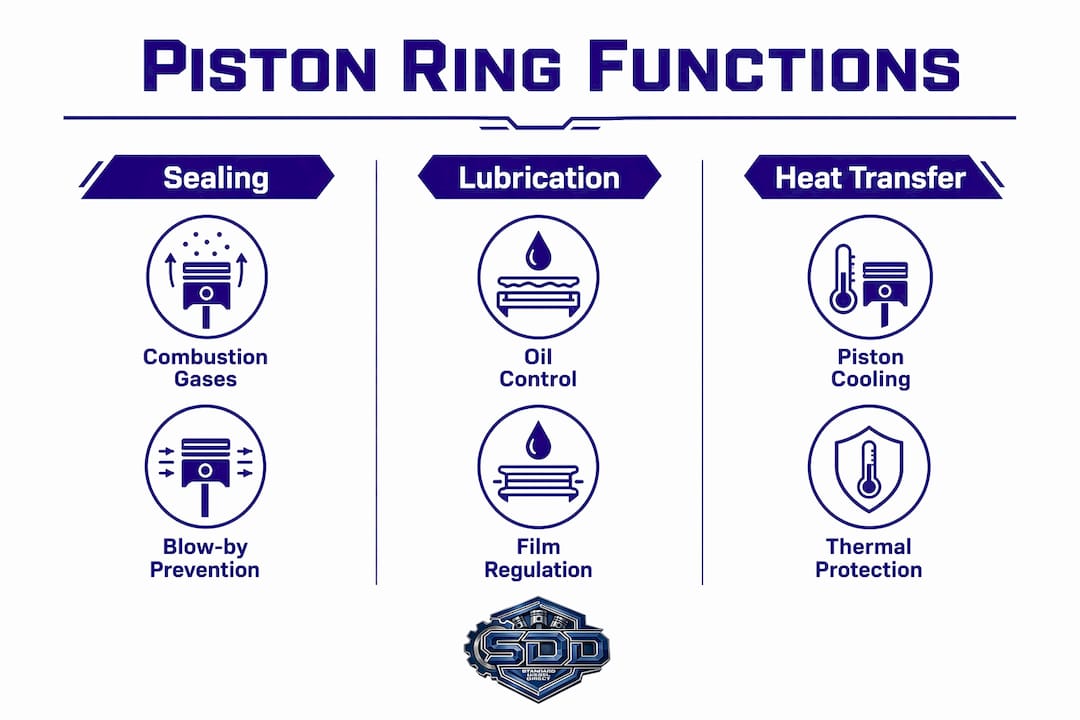
Piston rings in diesel engines serve three distinct functions: sealing combustion gases, controlling oil film on the cylinder wall, and transferring heat from the piston crown to the cylinder. Each function is handled by a specific ring type in the ring pack, and each directly affects engine output and longevity.
Sealing combustion gases
The compression ring sits at the top of the piston and seals the combustion chamber against blow-by. Blow-by occurs when combustion gases escape past the piston into the crankcase, reducing cylinder pressure and power output. A tight seal maintains the compression ratio the engine was designed to run, which is non-negotiable in high-compression diesel applications. Without this seal, the turbocharger and fuel system work harder to compensate for lost efficiency.
Controlling oil lubrication
The oil control ring, typically the bottom ring in a three-ring pack, scrapes excess oil from the cylinder wall on the downstroke and returns it to the oil pan. This prevents oil from entering the combustion chamber, where it would burn and produce white or blue smoke. At the same time, the ring leaves a precise oil film on the bore to reduce friction and protect the cylinder surface. Too much oil causes fouling; too little causes scuffing.
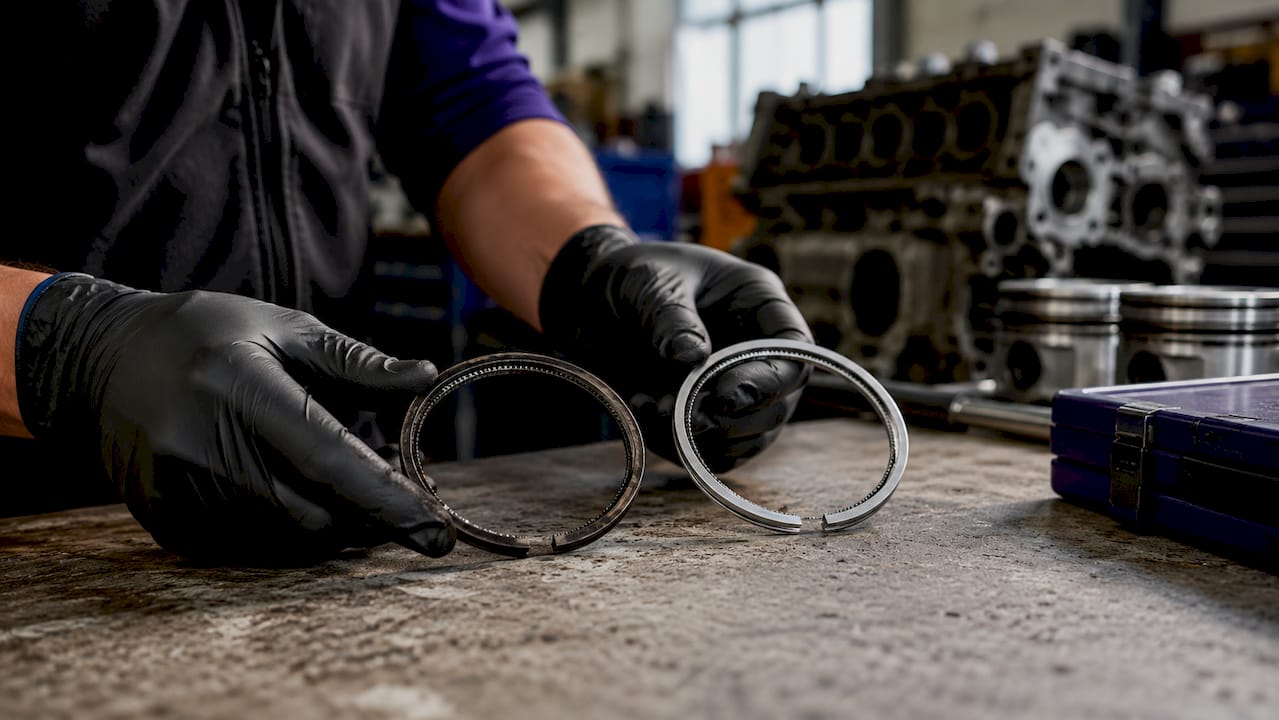
Transferring heat from piston to cylinder
The piston crown absorbs enormous heat during combustion, and the rings are the primary path for that heat to travel into the cylinder wall and then to the coolant. A ring that fits poorly or has lost tension transfers less heat, allowing the piston to overheat and potentially seize. Piston ring pack design involves interdependent factors like ring height, material, coating, tension, and bore finish, all of which affect heat transfer alongside sealing and oil control.
- Compression ring: Seals combustion gases; sits closest to the combustion chamber
- Wiper ring (second ring): Assists sealing and helps scrape oil; acts as a backup to the compression ring
- Oil control ring: Regulates oil film thickness; returns excess oil to the sump
Pro Tip: When rebuilding a diesel engine, never reuse old rings even if they look intact. Rings lose radial tension over time, and reduced tension means reduced sealing and heat transfer, both of which hurt power and longevity.
How does piston ring design affect diesel engine performance and friction?
Ring design is one of the most consequential engineering decisions in a diesel engine build. Piston ring friction accounts for roughly 24% of total mechanical friction losses in an engine. That single figure explains why engine builders spend significant effort reducing ring friction without sacrificing the sealing needed for compression and oil control.
Ring count and diminishing returns
Adding rings to a piston improves sealing up to a point. Frictional losses increase significantly with each additional ring, while sealing improvements diminish after the first two rings. Most modern diesel engines run a three-ring pack because it balances sealing effectiveness against parasitic friction losses. Running four rings on a street diesel adds friction without meaningful compression gains.
Ring height, tension, and material
Thinner rings reduce friction but carry less thermal mass. In boosted diesel applications, reduced thermal mass means the ring absorbs and transfers less heat per cycle, which accelerates wear under sustained load. Thicker rings handle heat better but increase friction. Ring tension follows the same trade-off: higher tension improves sealing but raises friction and wear rates on the cylinder bore.
Modern diesel piston rings use specialized coatings like modified chromium with aluminum oxide or diamond particles, known as CKS and GDC coatings, to resist wear and manage heat. These coatings extend service life significantly compared to uncoated cast iron rings. Poor lubrication degrades these coatings quickly, which is why oil quality and fuel system cleanliness matter as much as ring selection.
| Design Factor | Effect on Sealing | Effect on Friction |
|---|---|---|
| More rings | Improved (diminishing returns after 2) | Increases with each ring |
| Higher ring tension | Better combustion seal | Higher bore wear and friction |
| Thinner ring height | Reduced friction | Less heat transfer capacity |
| CKS/GDC coating | Maintains seal under heat | Reduces wear-related friction loss |
| Wider bore finish | Better oil film retention | Lower scuffing risk |
Pro Tip: On performance diesel builds, match ring coating to your fuel system and oil change interval. CKS-coated rings tolerate heat well, but they still depend on clean oil. A quality fuel system that prevents injector contamination protects the entire ring pack.
What common failures and maintenance challenges affect piston rings?
Piston ring failures follow predictable patterns. Knowing what causes each failure mode lets you catch problems before they become full engine rebuilds.
Ring binding caused by soot or oil degradation is one of the most common and destructive failure modes in diesel engines. When combustion deposits pack into the ring grooves, the rings can no longer float freely. A stuck ring loses its ability to seal, and compression drops rapidly. Extended oil change intervals and low-quality fuel accelerate this process.
Worn or fractured rings produce blow-by, increased oil consumption, and blue or white exhaust smoke. A fractured compression ring allows combustion gases to bypass the piston on every stroke, pressurizing the crankcase and forcing oil past seals. You will often see crankcase pressure rise before power loss becomes obvious, which makes crankcase ventilation monitoring a useful early warning tool.
The effects of worn piston rings extend beyond the rings themselves. Cylinder walls score when oil film breaks down, and piston grooves widen from the impact of loose rings, requiring a full piston replacement rather than a simple ring swap.
Maintenance practices that extend ring life:
- Change oil at or before the manufacturer’s recommended interval, especially in high-soot diesel applications
- Use fuel with adequate lubricity; contaminated or low-lubricity diesel accelerates ring groove wear
- Monitor crankcase pressure and exhaust smoke color as early diagnostic indicators
- Inspect ring grooves for carbon buildup during any top-end service
- Check cylinder bore for out-of-round or taper before installing new rings
Exhaust gas temperature is a reliable diagnostic indicator of ring condition. A drop in EGT at a given load point can signal ring wear or improper end-gap before power loss becomes noticeable. Diesel mechanics who track EGT with a gauge or data logger catch ring problems weeks before they become catastrophic.
How do you properly set and measure piston ring end-gap?
End-gap is the clearance between the two ends of a piston ring when it sits inside the bore. Getting this measurement right is one of the most critical steps in any diesel engine assembly.
The recommended end-gap range is 0.002 to 0.004 inches per inch of bore diameter to accommodate thermal expansion during operation. A 4-inch bore, for example, requires an end-gap between 0.008 and 0.016 inches for the top compression ring. Too tight, and the ring ends butt together as the engine heats up, causing the ring to bind or break. Too loose, and combustion gases escape past the gap, reducing compression and raising exhaust gas temperature.
Research confirms that increasing end-gap lowers exhaust gas temperature, with a measured drop from 92°C to 72°C at idle as gap increases beyond spec. That temperature drop reflects less effective sealing and less efficient combustion. EGT monitoring is therefore a practical field diagnostic for end-gap faults.
Follow these steps to measure and set end-gap correctly:
- Square the ring in the bore. Push the ring into the cylinder using the piston skirt to keep it level. Measure at the depth where the ring will actually operate.
- Measure the gap with feeler gauges. Insert the gauge blades into the gap and find the largest blade that fits without forcing.
- Compare to spec. Calculate the target range using the 0.002 to 0.004 inch per inch of bore formula for the application.
- File to correct an undersized gap. Use a ring filer or fine-cut file to remove material from the ring ends evenly. File in one direction only to avoid chipping.
- Recheck after filing. Re-square the ring and re-measure. Repeat until the gap falls within spec.
- Never close a gap that is too large. An oversized gap requires a new ring. There is no reliable way to close a ring end-gap once it has been filed open.
Pro Tip: Set end-gaps for the second ring slightly larger than the top ring. This prevents pressure from building between the rings and lifting the top ring off the bore, a condition called ring flutter that kills compression at high RPM.
Upgrade your diesel’s fuel system with Standard Diesel Direct
Piston rings depend on clean, consistent fuel delivery to stay in good condition. Contaminated fuel accelerates ring groove deposits, degrades oil faster, and shortens the service life of the entire ring pack.

Standard Diesel Direct carries FASS Titanium Signature Series fuel systems built specifically for light-duty diesel trucks, including the Titanium Signature Series Plus for 1998–2004 Dodge Cummins. These systems filter fuel to a finer level than the OEM setup, remove water and air from the fuel supply, and deliver consistent pressure to the injectors. Cleaner fuel means less combustion deposit buildup in ring grooves and longer ring life. Browse the full catalog at Standard Diesel Direct to find the right fuel system for your truck.
Key Takeaways
Piston rings control sealing, oil consumption, and heat transfer simultaneously, and any failure in one function degrades all three.
| Point | Details |
|---|---|
| Three core functions | Rings seal combustion gases, control oil film, and transfer heat from piston to cylinder wall. |
| Friction trade-off | Ring friction accounts for roughly 24% of total mechanical engine friction; more rings add friction with diminishing sealing returns. |
| End-gap precision | Set end-gap at 0.002 to 0.004 inches per inch of bore diameter to prevent ring butting or blow-by. |
| EGT as a diagnostic tool | A drop in exhaust gas temperature at a given load signals ring wear or improper end-gap before power loss appears. |
| Coating and oil quality | CKS and GDC coatings extend ring life, but only when paired with clean oil and quality fuel delivery. |
FAQ
What is the role of piston rings in a diesel engine?
Piston rings seal combustion gases in the cylinder, control the oil film on the bore, and transfer heat from the piston to the cylinder wall. All three functions run simultaneously and each directly affects compression, oil consumption, and engine durability.
What are the symptoms of worn piston rings?
Worn rings produce blue or white exhaust smoke, increased oil consumption, rising crankcase pressure, and reduced compression. A measurable drop in exhaust gas temperature at a consistent load point is an early indicator before power loss becomes obvious.
How do I know if my piston ring end-gap is correct?
Measure the ring gap with feeler gauges after squaring the ring in the bore. The correct range is 0.002 to 0.004 inches per inch of bore diameter for the top compression ring.
Why does ring design affect diesel engine friction?
Piston ring friction makes up about 24% of total mechanical friction in an engine. Ring count, tension, height, and coating all affect how much friction the ring pack generates relative to the sealing it provides.
How often should piston rings be inspected or replaced?
Rings do not have a fixed replacement interval, but they should be inspected during any top-end service or when symptoms like blow-by or oil consumption appear. High-soot diesel applications and extended oil change intervals accelerate ring groove wear and should prompt earlier inspection.
Recommended
- How to Install Diesel Performance Injectors: Full Guide – Standard Diesel Direct
- Titanium Signature Series Diesel Fuel System 220GPH (70-75 PSI) GM GM – Standard Diesel Direct
- Titanium Signature Series Diesel Fuel System 240GPH (70-75 PSI) GM GM – Standard Diesel Direct
- Titanium Signature Series Diesel Fuel System 140GPH (70-75 PSI) GM GM – Standard Diesel Direct