

For most Ford Super Duty owners dealing with steering vagueness, an off-center axle, or added lift height, a heavy-duty adjustable track bar with rebuildable ends is the practical fix. The Kryptonite Death Grip family covers stock, leveled, and lifted F250 and F350 trucks across multiple model years. Confirm your exact model year and lift range on the product fitment page before you order, since bracket and bar length requirements shift as lift height increases.
TL;DR:
- An adjustable track bar with rebuildable ends is essential for correcting steering wander and axle offset on lifted or off-center F250 and F350 trucks.
- Proper fitment depends on your truck’s model year and lift height, with larger lifts often requiring drop brackets to prevent binding.
- Worn track bar joints can mimic other steering issues, and diagnosing symptoms like death wobble, axle misalignment, or steering play is crucial before replacement.
- Pairing a quality track bar with a new steering stabilizer and full steering system inspection improves highway handling and reduces bump steer.
- Always verify bolt compatibility, thread engagement, and alignment after installation to ensure optimal performance and longevity of the upgrade.
What a Track Bar Upgrade Does for Super Duty Handling
A track bar is a single link that runs from the frame to the front axle, holding the axle centered underneath the truck as the suspension moves up and down. Without it, the axle would slide side to side every time you hit a bump. That lateral control works alongside the drag link, which handles steering input, and the two need compatible angles to work correctly together.
Bump steer happens when the track bar and drag link swing through different arcs as the suspension travels. If those arcs don’t match, the axle’s small side-to-side movement gets translated into unwanted steering input, and the truck wanders or darts over rough pavement. Lifting a truck changes those angles, which is why a stock track bar often can’t keep geometry correct once you’ve added even a modest leveling kit.
Real-world reports on diesel forums point to a consistent pattern:
- Worn track-bar joints allow axle play that shows up as wander at highway speed
- A failed track bar lets the axle shift off-center, which drivers notice through uneven tire wear
- Death wobble complaints frequently trace back to a combination of worn steering parts and a tired track bar, not one single failure
What Are the Signs You Need a Track Bar Upgrade?
Diagnosing a track bar problem starts with a few observable symptoms, but not every one of them points to the same fix. Here’s how to work through it:
- Check for death wobble. A violent shake through the steering wheel at 45 to 65 mph, usually triggered by a bump, is the classic complaint. Mechanics and experienced owners consistently name worn steering components and worn track-bar joints as the leading causes.
- Look at the axle position. Stand in front of the truck and see if the front axle sits noticeably off-center under the frame. That’s a strong sign the track bar has stretched or the mount has failed.
- Inspect the joint for play. With the truck on a lift, grab the axle-side bracket and try to rock it. Any looseness in the ball joint or heim end means it’s due for service.
- Feel for wander and pull. A truck that constantly needs steering correction on straight, flat road usually has bushing or joint wear somewhere in the steering or track-bar system.
Not every symptom demands a full replacement. If the joint is loose but the tube and mounts are solid, a rebuild kit can restore factory tolerances for a fraction of the cost. Once you’ve added lift or you’re chasing persistent bump steer, though, an adjustable bar with a longer effective range solves problems a stock-length bar physically cannot.
Pro Tip: Before you replace anything, check drag link and tie rod ends first. A worn track bar and worn steering linkage often fail around the same mileage, and replacing only one won’t fully cure death wobble.
Matching Track Bar Fitment to Your Model Year and Lift
Fitment on Super Duty trucks splits cleanly by generation, and getting this wrong is the most common installation headache. The 2005 to 2016 F250 and F350 trucks use different frame mounts and axle brackets than the 2017 and newer trucks, which is why the Kryptonite Death Grip lineup ships as separate SKUs rather than one universal part. F450 and F550 chassis cab trucks share much of the same front axle hardware but sometimes need spacer or bracket adjustments depending on trim.
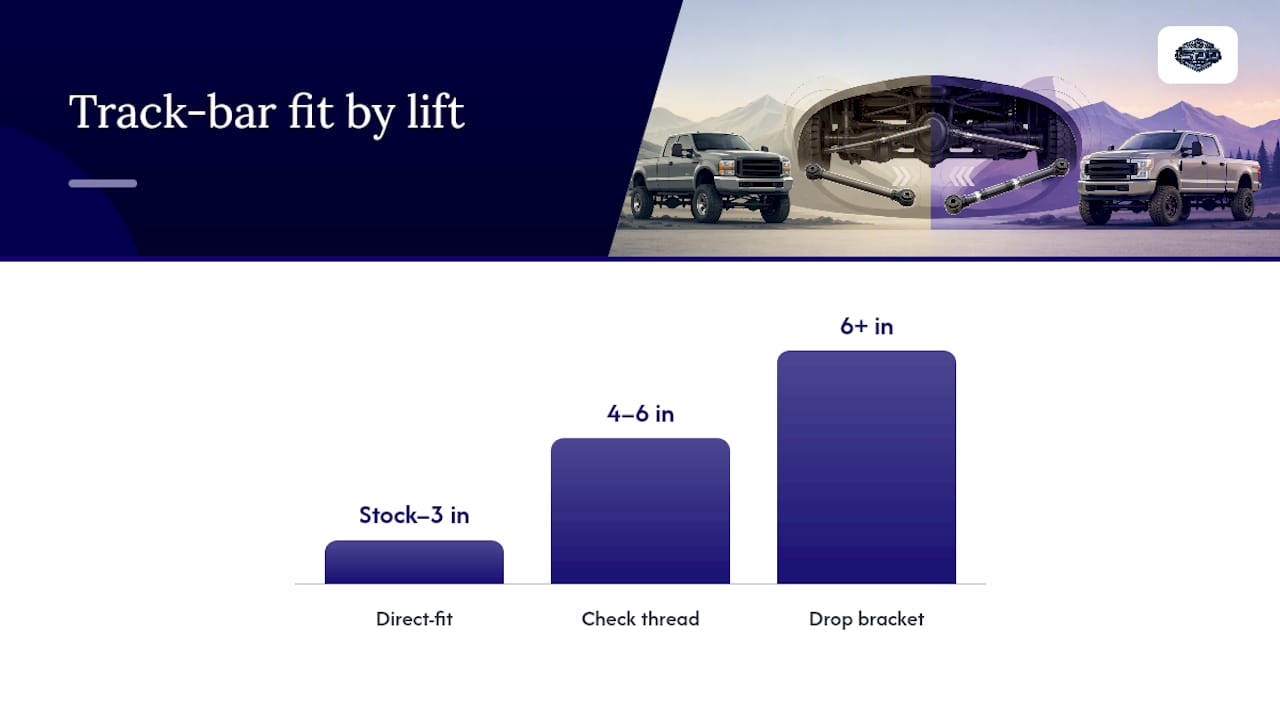
Lift height determines whether you can run a direct-fit bar or need additional hardware:
- Stock to about 3 inches of lift: most adjustable bars bolt straight to factory mounting points with no bracket changes
- 4 to 6 inches of lift: many setups still work with a direct-fit bar, but you’ll want to check the adjuster’s usable thread range against your actual ride height
- 6 inches and beyond: a drop bracket is often required to correct the track-bar angle and avoid binding at full suspension travel
Before finalizing any large-lift combination, verify thread engagement and bracket compatibility against the manufacturer’s fitment notes rather than guessing from lift height alone.
End-type matters too. Heim joints offer sharper articulation and are easy to rebuild, but they transmit more road noise into the cab. OE-style ball joints and encapsulated uniballs run quieter and often include grease fittings, trading a small amount of articulation for daily-driver comfort.
How to Choose an Upgraded Track Bar: A Decision Checklist
Picking the right track bar comes down to four practical questions, in order of importance:
- What’s the tube made of, and how thick is the wall? DOM tubing with a heavier wall thickness resists bending under load far better than stamped stock steel, especially once you’re running larger tires or towing regularly.
- Is the joint rebuildable? Greaseable rod ends, encapsulated uniballs, and replaceable ball joints all let you service the wear point instead of replacing the entire bar, which matters a lot over the life of a truck you plan to keep.
- Does the adjuster work without pulling the bar off the truck? On-vehicle adjustment saves real shop time when you’re dialing in axle centering after a lift or alignment.
- What’s the total cost, including maintenance? Expect a quality adjustable track bar to run higher upfront than a stamped-steel replacement, but a rebuild kit later costs far less than buying a whole new bar. Budget for a stabilizer and alignment at install time, not just the bar itself.
Torque specs and thread engagement aren’t optional details. Always adjust the bar to spec, torque the mounting bolts to the manufacturer’s number, and get an alignment done immediately after. Skipping that step is the single most common reason a “bad” track bar upgrade actually performs worse than the stock part it replaced.
Standard Diesel Direct’s Kryptonite Track Bar Lineup
The Kryptonite Death Grip track bar family is built specifically around Super Duty fitment, split by generation to avoid mismatched bracket issues.
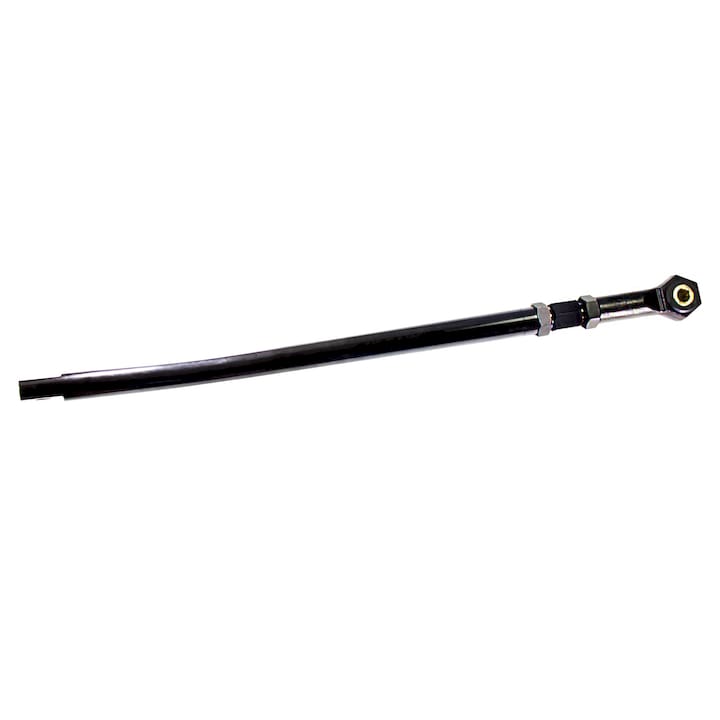
- Kryptonite Ford Super Duty Death Grip Track Bar F250/F350 2005 to 2016 covers the earlier frame and axle bracket design, with heavy-duty DOM tubing and a rebuildable joint at the axle end.
- Kryptonite Ford Super Duty Death Grip Track Bar F250/F350 2017 to 2024 matches the newer chassis geometry and pairs with drop brackets for larger lift setups.
- Kryptonite Track Bar for 2013 to 2026 RAM 2500/3500 rounds out the family for owners running mixed fleets or considering a Ram alongside a Super Duty.
All three share the same design philosophy: heavier wall tubing than the factory bar, a serviceable joint instead of a sealed, throwaway one, and on-vehicle adjustment so you can dial in axle centering without dropping the bar for every fine-tune.
Owners who install a properly matched adjustable bar and follow up with an alignment report immediate improvement in steering feel and a reduction in bump steer, which lines up with what the geometry math predicts. When the joint eventually needs attention, the Kryptonite Track Bar Ball Joint rebuild component lets you restore the bar to spec rather than replacing the whole assembly.
Troubleshooting Common Track Bar Installation Problems
Most installation complaints trace back to one of four issues, and working through them in order saves diagnostic time.
The bar seems too short or too long once bolted up. Check your actual lift height against the manufacturer’s stated adjustment range before assuming the part is defective. A bar rated for 0 to 4.5 inches of lift will bind or run out of thread on a 6 inch setup.
The axle isn’t centered after installation. This almost always means the adjuster wasn’t set correctly before final torque. Loosen the jam nut, rotate the adjuster to shift axle position, then measure frame-to-tire clearance on both sides before locking it down.
Steering feels heavier or noisier than before. Heim-jointed bars transmit more road feedback than OE-style ball joints by design. If the noise is a clunk rather than steady feedback, recheck bolt torque at both mounting ends.
Death wobble persists after the new bar is installed. The order of operations matters here: inspect track-bar brackets and joints first, then move to drag link and tie rod ends, and only then consider whether the bar itself needs replacing. A new track bar won’t fix a worn drag link, and both wear at similar mileage.
Post-install checklist: torque all mounting bolts to spec, get a front-end alignment within a few days of installation, and recheck torque after the first 500 miles of driving since new bushings and joints tend to seat in.
How Other Suspension Parts Affect Track Bar Performance
A track bar doesn’t work in isolation, and installing one while ignoring the rest of the steering and suspension system leaves performance on the table. The drag link runs nearly parallel to the track bar by design, and if one is worn or set at the wrong angle, the other can’t fully do its job even when it’s brand new.
Steering stabilizers matter too. A stabilizer doesn’t correct axle position, but it dampens the oscillation that turns a small bump into a full wobble event. Pairing a fresh track bar with a worn or undersized stabilizer often leaves a truck feeling only partially improved. Many owners upgrade both at once rather than chasing the problem twice.
Leaf springs, control arms, and the coil springs on independent-style setups also shift ride height, which changes the angle the track bar operates at. If you add a lift kit after already installing an adjustable track bar, plan to revisit the adjustment rather than assuming the original setting still holds. The same logic applies to axle spacers used with certain drop-bracket lift combinations. Every component that changes ride height or axle position has a ripple effect on track-bar geometry, which is exactly why adjustable bars exist instead of fixed-length replacements.
Real Owner Feedback After a Track Bar Upgrade
Forum threads from Super Duty owners tell a consistent story once an adjustable track bar goes in correctly. Drivers who replaced a worn factory bar and paired the install with a proper alignment describe steering that feels tighter on the highway, with far less correction needed to hold a lane. That matches the underlying mechanics: restoring correct axle position and matching track-bar geometry to the drag link removes the bump-steer input that was causing to wander in the first place.
Owners running lifted trucks report a different kind of improvement: eliminating the binding or clunking that showed up when a stock-length bar was stretched past its intended geometry. That symptom often gets misdiagnosed as a bad ball joint or tie rod, when the real issue was a track bar working outside its design range on a truck sitting several inches higher than stock.
The pattern that shows up again and again in these accounts is that a track bar upgrade rarely fixes everything by itself if the truck also has worn drag link ends or a tired stabilizer. Owners who addressed the full steering system at once report the most complete resolution of death wobble and wander complaints, rather than partial improvement that leaves them second-guessing the fix months later.
Ordering the Right Kryptonite Track Bar for Your Truck
Getting the right part starts with confirming your exact model year and lift height, since a bar built for 2017 and newer trucks won’t bolt onto the earlier frame design, and vice versa.
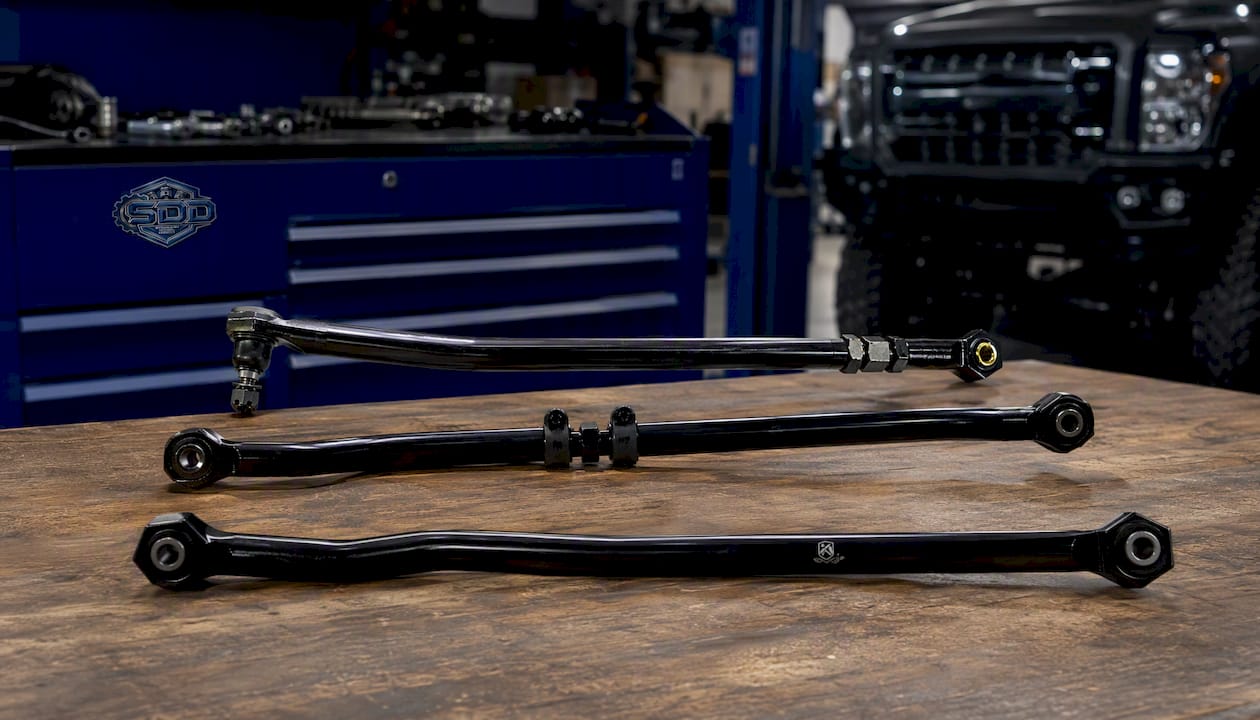
Start by selecting your truck’s model year on the product page, then match that to the correct Death Grip SKU for your generation. If you’re running more than a few inches of lift, check whether your combination needs a drop bracket before you check out, since installing an adjustable bar without the correct bracket can leave the geometry wrong even with a quality part. Pair the bar with a rebuild kit for future maintenance, and consider adding a steering stabilizer at the same time, since owners and technicians consistently recommend pairing the two for the best steering response.
The fitment pages are organized around exact model-year ranges to help ensure proper part fitment. If you’re unsure which SKU matches your lift setup, or you want a second opinion on bracket requirements, reach out through the site’s support channel before you order rather than after. For readers weighing heavier-duty accessories alongside a suspension upgrade, XTR Offroad Products covers towing and off-road hardware that complements a Super Duty build. Confirm your vehicle’s exact year and lift range on the 2005 to 2016 Death Grip track bar page or the 2017 to 2024 Death Grip track bar page and place your order today.
Sources
FAQ
Does a Track Bar Fix Death Wobble?
A track bar can fix death wobble when a worn or failed track-bar joint is the root cause, but mechanics and owners consistently point to worn steering components like the drag link and tie rod ends as equally common culprits. Inspect the full steering system before assuming the track bar alone will solve it.
What Does a Track Bar Do on an F250?
The track bar holds the front axle centered under the frame as the suspension moves and works alongside the drag link to keep steering geometry correct, preventing bump steer and axle offset.
How Much Does a Track Bar Replacement Cost?
Costs vary by whether you need a rebuild kit, a full adjustable bar, or a bar plus a drop bracket for larger lifts, and installation labor adds to that if you’re not doing it yourself. Check current pricing on the specific SKU that matches your model year and lift range for an exact figure.
What Is the Best Suspension Upgrade for a Ford F250?
For trucks already showing steering wander, axle offset, or bump steer after a lift, an adjustable track bar with rebuildable joints, like the Kryptonite Death Grip series, addresses the root geometry problem rather than masking it. Pairing that upgrade with a steering stabilizer and a fresh alignment gives the most complete result.