

Diesel glow plugs are defined as the electric heating elements that bring combustion chamber temperatures high enough to ignite diesel fuel without a spark. The three main types of diesel glow plugs are metal sheath, ceramic, and pressure sensor (PSG) models, each built for different heating speeds, temperature ranges, and engine management roles. Choosing the wrong type affects cold start reliability, fuel economy, and emissions compliance. This guide breaks down every category, explains the performance differences that matter, and gives you the practical knowledge to make the right call for your truck.
1. What are the main types of diesel glow plugs?
Glow plug technologies fall into three primary categories: metal sheath, ceramic, and pressure sensor. Each type uses a different heating element design, which directly determines how fast it reaches operating temperature and how long it lasts.
Metal sheath glow plugs are the traditional standard. They use a coiled resistance wire inside a steel sheath filled with magnesium oxide powder. Heat-up time runs 5–10 seconds, which is adequate for moderate climates but slower than newer designs. Lifespan typically falls in the 60,000–100,000 mile range.
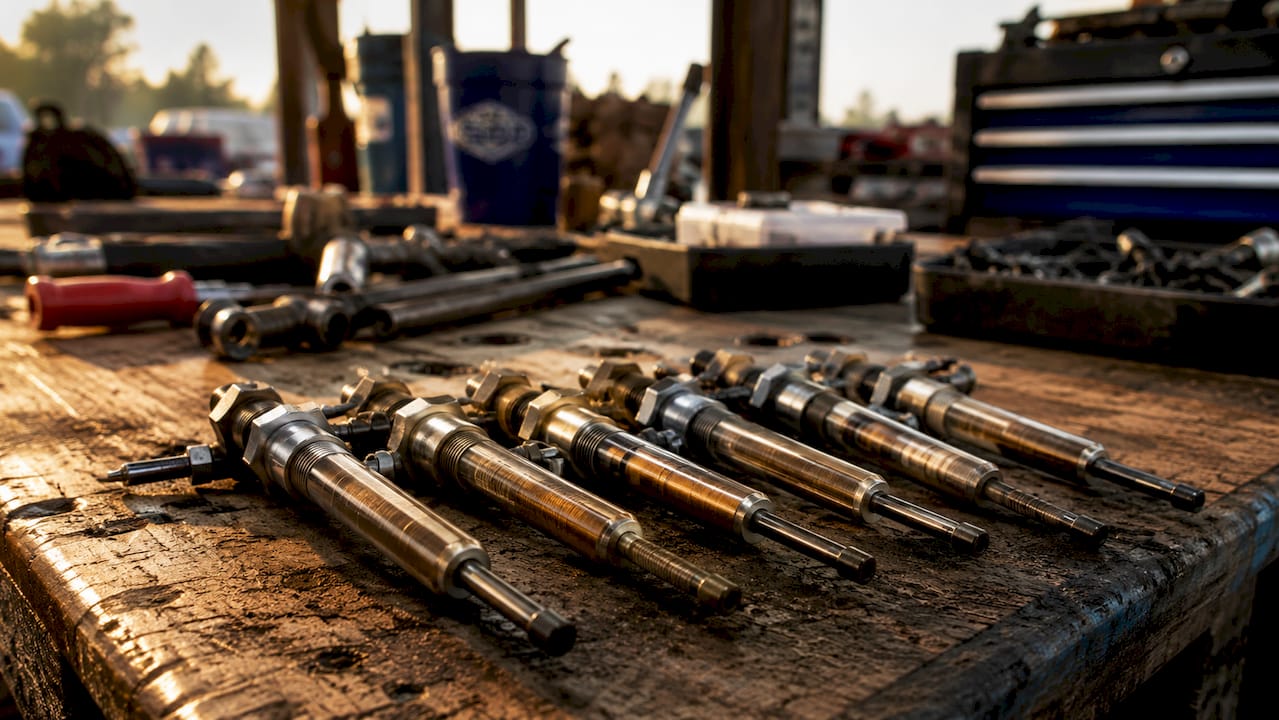
Ceramic glow plugs represent a significant step forward. The ceramic heating element reaches temperatures above 1,500°C in under 3 seconds. That speed matters most in cold climates, where fast heat-up directly reduces white smoke and unburned fuel emissions on startup. Ceramic plugs also outlast metal sheath designs, with lifespans exceeding 100,000 miles under normal conditions.
Pressure sensor glow plugs (PSG) combine a traditional heating element with a built-in combustion pressure sensor. The sensor feeds real-time cylinder pressure data to the engine control unit (ECU), allowing the ECU to adjust injection timing and fuel delivery on the fly. PSG plugs are found in modern direct-injection diesel engines where combustion management precision is a priority.
| Type | Heat-up time | Max temp | Typical lifespan |
|---|---|---|---|
| Metal sheath | 5–10 seconds | ~900°C | 60,000–100,000 miles |
| Ceramic | Under 3 seconds | Above 1,500°C | 100,000+ miles |
| Pressure sensor (PSG) | Under 3 seconds | Above 1,500°C | Varies by engine |
2. How glow plug type affects cold start performance
Ceramic plugs deliver the fastest heat-up of any glow plug category. That speed directly reduces the window of incomplete combustion during cold starts, which cuts white smoke output and lowers hydrocarbon emissions before the engine reaches operating temperature. For diesel owners in northern states or high-altitude environments, this difference is measurable from the first cold morning.
Metal sheath plugs perform reliably in mild climates where ambient temperatures rarely drop below freezing. The 5–10 second preheat cycle is long enough to cause rough idle and excess smoke in sub-zero conditions, but the plugs are durable and widely available for older engine platforms.
Pressure sensor plugs add a layer of engine management that neither metal nor standard ceramic plugs can provide. By feeding cylinder pressure data to the ECU in real time, PSG plugs allow the engine to correct injection timing cycle by cycle. The result is more consistent combustion, better fuel economy, and lower NOx emissions across varying load conditions.
- Ceramic plugs reduce cold start emissions most effectively in temperatures below 32°F.
- Metal sheath plugs suit pre-2005 diesel platforms where ceramic fitment is not available.
- PSG plugs are standard equipment on many post-2015 European and Asian diesel engines.
- All three types require a functioning glow plug control module to deliver rated performance.
Pro Tip: If your diesel idles rough only on cold mornings and clears up after two minutes of running, the glow plugs are the first system to test, not the injectors.
3. Practical tips for diesel glow plug replacement
Replacing glow plugs correctly requires more than swapping parts. System-wide diagnostics are the first step. Verify the glow plug control module, wiring harness, and ground connections before pulling a single plug. Replacing plugs without testing the full system wastes time and money, and a failed module will destroy new plugs just as fast as old ones.
The removal process itself carries real risk. Thread galling is the most common and costly mistake. Forcing a seized plug strips the threads in the cylinder head, turning a $30 part into a $1,500 repair. Apply penetrating oil to each plug base on a warm engine and let it soak for 15–30 minutes before attempting removal. If a plug is stuck, let the oil soak overnight rather than forcing it.
Follow these steps for a clean replacement:
- Run the engine to warm temperature before starting. Heat expands the metal and makes plug removal significantly easier.
- Apply penetrating oil around each plug base. Allow 15–30 minutes of soak time, or overnight for stubborn plugs.
- Use a thin-wall glow plug socket to avoid cracking the ceramic tip on newer plug designs.
- Remove plugs slowly with steady, even pressure. Never jerk or impact-drive a seized plug.
- Inspect threads in the cylinder head before installing new plugs. Clean threads with a thread chaser if needed.
- Torque to spec. Standard torque for most diesel glow plugs is 10–14 ft-lbs (15–22 Nm). Use a calibrated torque wrench, not an impact gun.
- Test the new plugs with a multimeter before reinstalling the harness. Each plug should show low resistance (typically 0.5–2 ohms).
Pro Tip: Overtorquing glow plugs cracks the internal heating element before the engine ever starts. A calibrated torque wrench is not optional on this job.
Failing glow plugs produce recognizable symptoms: hard cold starts, rough idle that clears after warm-up, white or gray smoke on startup, and a check engine light with codes related to the glow plug circuit. Any one of these symptoms warrants a full glow plug system check, not just a visual inspection of the plugs themselves.
4. Matching glow plug types to your engine and climate
Glow plug specifications directly affect combustion efficiency and engine longevity. A tip length difference of just 1–2 mm can cause poor combustion or damage the control module. Always match plugs to your engine’s VIN-specific requirements, not just the general engine family.
Here is how to match plug type to your situation:
- Pre-2005 diesel trucks (Cummins 5.9L, Duramax 6.6L LB7/LLY, Powerstroke 6.0L): Metal sheath plugs are the standard fitment. Ceramic upgrades may be available but require verifying voltage and tip length compatibility.
- 2005–2015 diesel platforms: Ceramic plugs are factory-spec on many of these engines. Verify the control module voltage rating before upgrading from metal sheath to ceramic.
- Post-2015 direct-injection diesels: Many use PSG plugs from the factory. Replacing PSG plugs with standard ceramic units disables the pressure sensing function and can trigger ECU fault codes.
- Cold climate operation: Cold weather accelerates glow plug wear because longer preheat cycles increase thermal stress. Ceramic plugs with self-regulating heating elements handle this stress better than metal sheath designs.
- High-mileage trucks: Treat glow plugs as a scheduled maintenance item at 100,000 miles regardless of symptoms. Proactive replacement prevents cold-morning failures.
Replacing plugs as a complete set is the correct approach every time. Mixing old and new plugs creates uneven combustion across cylinders, increases emissions, and accelerates wear on the remaining old plugs. The cost difference between replacing one plug and replacing a full set is small compared to the cost of a second job six months later.
| Engine scenario | Recommended plug type | Key consideration |
|---|---|---|
| Pre-2005 light-duty diesel | Metal sheath | Verify voltage rating |
| 2005–2015 diesel truck | Ceramic | Check control module compatibility |
| Post-2015 direct injection | Pressure sensor (PSG) | Do not substitute standard ceramic |
| Cold climate, any year | Ceramic (self-regulating) | Prioritize fast heat-up spec |
| High-mileage replacement | Full set, OEM spec | Replace all plugs at once |
For diesel owners who also want to address starting issues from the fuel side, diagnosing fuel delivery problems alongside glow plug testing gives you a complete picture of what is causing hard starts.
5. Common glow plug mistakes and how to avoid them
The most expensive glow plug mistakes are avoidable with the right information. Skipping diagnostics on the control module is the top error. A faulty module delivers incorrect voltage, which burns out new plugs in a matter of weeks. Always test module output voltage before installing new plugs.
Buying plugs by price alone is the second major mistake. A plug that is 1–2 mm shorter than spec sits too far from the combustion zone and produces incomplete ignition. A plug that is too long contacts the piston at top dead center. Neither scenario is recoverable without engine disassembly.
Using an impact wrench for installation destroys the heating element before the engine ever starts. The torque spec of 10–14 ft-lbs (15–22 Nm) is low by automotive standards. A hand-operated torque wrench is the only correct tool for the final tightening step. For additional context on proper diesel component installation techniques, the injector installation guide at Standard Diesel Direct covers the same precision-first approach that applies to glow plug work.
Key takeaways
Ceramic glow plugs deliver the best combination of fast heat-up, high temperature, and long service life for most modern diesel engines, making them the top choice for cold climates and high-mileage trucks.
| Point | Details |
|---|---|
| Three plug categories | Metal sheath, ceramic, and PSG plugs each serve different engine generations and performance needs. |
| Ceramic plugs heat fastest | Ceramic plugs reach above 1,500°C in under 3 seconds, cutting cold start emissions significantly. |
| PSG plugs feed the ECU | Pressure sensor plugs provide real-time combustion data; never substitute standard plugs on PSG-equipped engines. |
| Torque spec is critical | Install at 10–14 ft-lbs (15–22 Nm) with a calibrated torque wrench to avoid cracking the heating element. |
| Replace as a full set | Mixing old and new plugs causes uneven combustion and accelerates wear on remaining plugs. |
Fuel system support for your diesel
Clean, consistent fuel delivery works hand in hand with a healthy glow plug system. When combustion starts right and fuel arrives at the correct pressure and volume, your diesel runs the way it was built to run.

Standard Diesel Direct carries FASS Titanium Signature Series fuel systems built specifically for light-duty diesel trucks, including the Titanium Signature Series Plus for Dodge Cummins and the Titanium Signature Series for Ford Powerstroke 6.4L. These systems remove air and contaminants from the fuel supply, support consistent injection pressure, and complement the ignition work your glow plugs do on every cold start. Browse the full selection at Standard Diesel Direct to find the right fit for your engine year and horsepower target.
FAQ
What are the three types of diesel glow plugs?
The three types are metal sheath, ceramic, and pressure sensor (PSG) plugs. Each uses a different heating element design optimized for specific heat-up speeds, temperature ranges, and engine management functions.
How long do diesel glow plugs last?
Metal sheath plugs typically last 60,000–100,000 miles, while ceramic plugs often exceed 100,000 miles. Cold climate operation shortens lifespan for all types because longer preheat cycles increase thermal stress.
Can I replace just one glow plug?
Replacing a full set is the correct approach. Mixing old and new plugs creates uneven combustion across cylinders, increases emissions, and accelerates wear on the remaining plugs.
What torque spec should I use for glow plug installation?
The standard torque for most diesel glow plugs is 10–14 ft-lbs (15–22 Nm). Always use a calibrated torque wrench. Overtorquing cracks the internal heating element and destroys the plug before the engine starts.
Do I need to test the glow plug control module before replacing plugs?
Testing the control module, wiring, and ground connections before replacing plugs is the correct first step. A faulty module delivers incorrect voltage and will burn out new plugs just as quickly as the old ones.
Recommended
- How to Install Diesel Performance Injectors: Full Guide – Standard Diesel Direct
- Titanium Signature Series Diesel Fuel System 220GPH (70-75 PSI) GM GM – Standard Diesel Direct
- Titanium Signature Series Diesel Fuel System 240GPH (70-75 PSI) GM GM – Standard Diesel Direct
- Titanium Signature Series Diesel Fuel System 140GPH (70-75 PSI) GM GM – Standard Diesel Direct