

A cold air intake delivers real, verifiable benefits, but they’re narrower than most marketing copy suggests. Expect sharper throttle response and louder induction sound almost every time; expect measurable horsepower or MPG gains only on turbocharged, knock-limited, or heat-soaked setups. If your factory intake already breathes well and your engine runs naturally aspirated with a stock tune, you’re mostly buying sound and feel, not dyno numbers.
TL;DR:
- Cold air intakes provide limited real-world horsepower gains, mainly benefiting turbocharged engines, heat-soaked setups, and engines after supporting modifications.
- Cooler intake air can increase density by about 1% per 10°F drop, but actual performance improvements depend heavily on intake design and engine calibration.
- The primary, consistent benefit for most drivers is improved throttle response and sound, not significant peak horsepower or fuel economy gains.
- Risks such as heat soak, water ingestion, and MAF sensor fouling must be managed, especially for intakes mounted low or in splash-prone areas.
- The most worthwhile upgrades target diesel trucks with turbocharged engines or heat issues, often requiring specific fitment and possibly a tune for optimal results.
How Cold Air Intake Benefits Work: Temperature, Density, and Design
Every gain a cold air intake produces starts with one physical fact: cooler air is denser air, and denser air packs more oxygen molecules per cubic inch. Engineering references built on SAE fundamentals put the theoretical ceiling at roughly 1% more power for every 10°F drop in intake air temperature on a naturally aspirated engine. That’s a real number, but it’s a ceiling, not a guarantee, since actual results depend on how much cooler the new intake path actually runs and how the ECU responds.
Design determines how much of that theoretical gain you actually capture. Three common approaches produce different real-world results:
- Sealed cold-air box — isolates the filter from underhood heat with a dedicated housing, typically delivering the coolest and most consistent intake air temperature (IAT).
- Short-ram intake — shortens the intake path for quicker throttle response but sits closer to engine heat, so IAT often runs warmer during stop-and-go driving.
- Open cone filter — maximizes airflow and sound but offers little heat isolation unless paired with a shield.
Mass airflow (MAF) sensor placement and intake path smoothness matter just as much as the filter itself. A kinked or narrow tube can choke airflow even with a bigger filter on the end, and a MAF sensor positioned too close to turbulent airflow can feed the ECU inaccurate readings, muddying throttle response instead of improving it.
What Horsepower and Torque Gains Are Realistic?
Dyno numbers on cold air intakes get inflated constantly, and the physics explains why: temperature alone caps the gain, but ECU behavior, knock control, and how restrictive your factory intake already was determine whether you see any of that ceiling in practice. Dyno testing consistently shows smaller gains than marketing claims because so many variables stack against a clean before-and-after comparison.
In practice, most stock daily drivers see a fraction of that on the dyno, since a well-designed factory intake often already keeps IAT reasonably low.
The bigger, more repeatable gains show up in specific situations:
- Turbocharged engines with knock sensitivity, where cooler charge air lets the ECU pull less timing and recover midrange torque.
- Heat-soak-prone platforms, where the factory intake draws warm underhood air and a cold air intake genuinely lowers IAT.
- Engines that have outgrown the factory intake, typically after supporting mods like a tune, turbo upgrade, or exhaust work.
For most drivers, the honest takeaway is midrange torque improvement and crisper throttle response rather than a dramatic peak-horsepower jump. Modern ECUs adapt to increased airflow, so gains tend to be modest but repeatable rather than explosive on an otherwise stock engine.
Does a Cold Air Intake Improve MPG?
The mechanism for MPG gains is real but small. Cooler, denser intake air can support marginally more efficient combustion, and a smoother, less restrictive intake path can reduce pumping losses, the energy the engine burns just pulling air through a clogged or convoluted path. Neither effect is large on its own.
Real-world MPG results are inconsistent for a simple reason: your driving style, terrain, and how the ECU manages fuel trims under the new airflow all matter more than the intake itself. A driver who uses the extra throttle response to accelerate harder will likely see MPG stay flat or drop, even with better combustion efficiency working in the background.
If you want to know what’s actually happening in your truck, run this test instead of trusting a forum post:
- Reset your trip computer and drive the same route, same conditions, for at least three tanks before installing.
- Install the intake, then repeat the same route and conditions for another three tanks.
- Compare average MPG across each set, not single-tank numbers, since single fill-ups swing too much on traffic and weather.
- Log intake air temperature during both periods if your scan tool supports it, so you can separate a real IAT drop from random variance.
Sound and Driving Feel: The Benefit Nobody Argues About
Induction noise is the most consistent, universally reported benefit of a cold air intake. Removing factory sound-deadening components and shortening or opening up the intake path lets you hear turbo spool, throttle blips, and airflow in a way the factory setup muffles. Owners frequently value this sound and throttle feel independently of measured horsepower, and for a lot of truck owners, that’s the whole point of the upgrade.
The trade-off is cabin drone on long highway trips, which some open cone setups make worse. A heat-shielded or boxed design tends to tame that drone while still sharpening the sound under acceleration. If sound and a more connected driving feel are your main goals, that’s a legitimate reason to buy, not just a placebo even when your dyno sheet shows single-digit gains.
What Are the Real Risks and Downsides?
Every cold air intake trades something for its gains, and the honest list of negatives matters as much as the benefits. Heat soak, water ingestion, and filtration trade-offs top the list of complaints from owners who skip research before buying.
- Heat soak in stop-and-go traffic. An intake positioned near the engine bay can pull warm air at idle, erasing the IAT advantage you’d see at highway speed.
- Water ingestion risk. Filters mounted low, especially in the front bumper area, can draw in water during deep puddles or flooded roads, risking hydrolock on an engine that pulls water into a cylinder.
- Filtration versus flow trade-off. High-flow media like oiled cotton lets in more air but can also let smaller particles pass, and over-oiling a filter is a common cause of MAF sensor fouling.
- MAF contamination and drivability issues. A fouled MAF sensor can trigger rough idle, hesitation, or a check engine light, and cleaning it improperly often makes things worse.
- Emissions and warranty considerations. Some intakes affect emissions compliance depending on your state’s rules, and modifying the intake system can raise warranty questions with your dealer. Check your local emissions requirements and your manufacturer’s warranty terms before installing anything that alters the factory air path.
Pro Tip: If you’re installing a low-mounted cone filter, add a splash shield or reroute the inlet higher in the engine bay. It’s a cheap fix that eliminates most water ingestion risk without sacrificing airflow.
When Is a Cold Air Intake Actually Worth It?
Run through this short checklist before you buy, because the answer depends heavily on what you’re driving and why.
- Is your engine turbocharged or knock-limited? Turbo diesel trucks and knock-sensitive gas engines see the most consistent, repeatable gains.
- Does your current setup suffer from heat soak? If your factory intake sits near a hot exhaust manifold or turbo housing, a sealed cold air intake solves a real problem.
- Are you planning supporting mods? A tune, turbo upgrade, or exhaust work often exposes a factory intake as the next bottleneck.
- How much do you value sound over silence? If cabin drone on a five-hour highway drive would annoy you, lean toward a shielded design over an open cone.
A daily-driven naturally aspirated commuter car probably won’t notice much beyond sound. A turbocharged diesel tow truck, an off-road side by side running in dusty, hot conditions, or a project engine already carrying a tune are the platforms where a cold air intake earns its keep. If you want proof rather than a feeling, log IAT before and after, or get a baseline and follow-up dyno pull under the same conditions.
Filter Types, Maintenance, and Installation Tips
Filter media determines both flow and long-term maintenance cost. Paper filters are cheap and easy to replace but restrict airflow the most. Oiled cotton filters flow well and can be cleaned and reoiled repeatedly, though improper oiling risks MAF fouling. Dry synthetic filters split the difference: solid airflow, no oil to manage, and a longer service life than paper.
- Inspect the filter every 12,000 to 15,000 miles, sooner in dusty or off-road conditions.
- Clean or replace before airflow restriction shows up as a drop in throttle response.
- Mount the inlet away from splash zones and away from direct heat sources like the exhaust manifold.
- If you’re adding a turbo upgrade or a tune alongside the intake, budget time for a professional tune, since supporting mods change how the ECU should read the new airflow.
Pro Tip: A sealed, shielded intake design consistently beats an open cone filter for keeping IAT low in stop-and-go traffic. If your truck spends more time idling than cruising, that’s the design worth paying extra for.
Why Diesel Truck Owners Choose Ram-Air Systems From Standard Diesel Direct
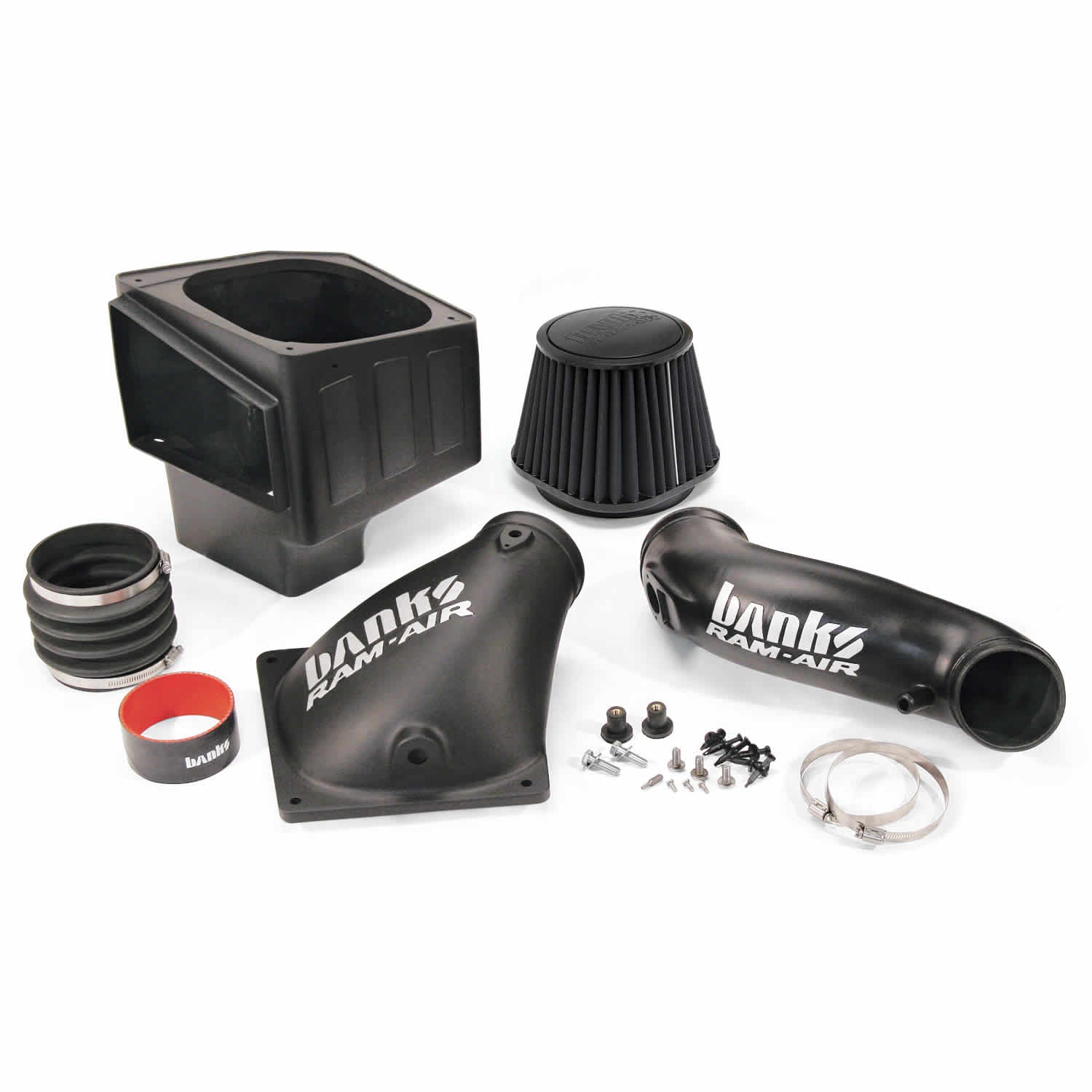
If your truck fits the profile from the checklist above, a heat-shielded, sealed intake solves the exact problems that plague open cone setups: heat soak at idle and inconsistent gains on the highway. Standard Diesel Direct carries the Banks Power Ram-Air Cold-Air Intake System built specifically to address that trade-off, with a housing designed to shield the filter from underhood heat while still opening up the intake path for turbo diesel platforms.
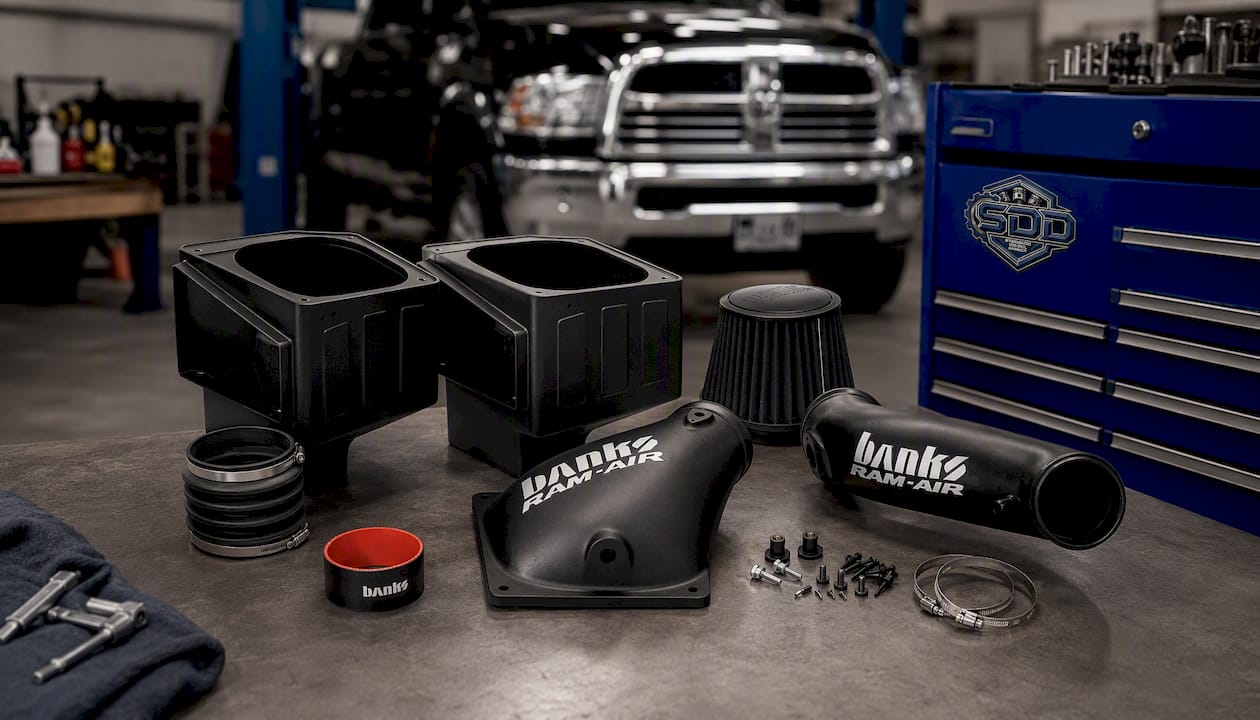
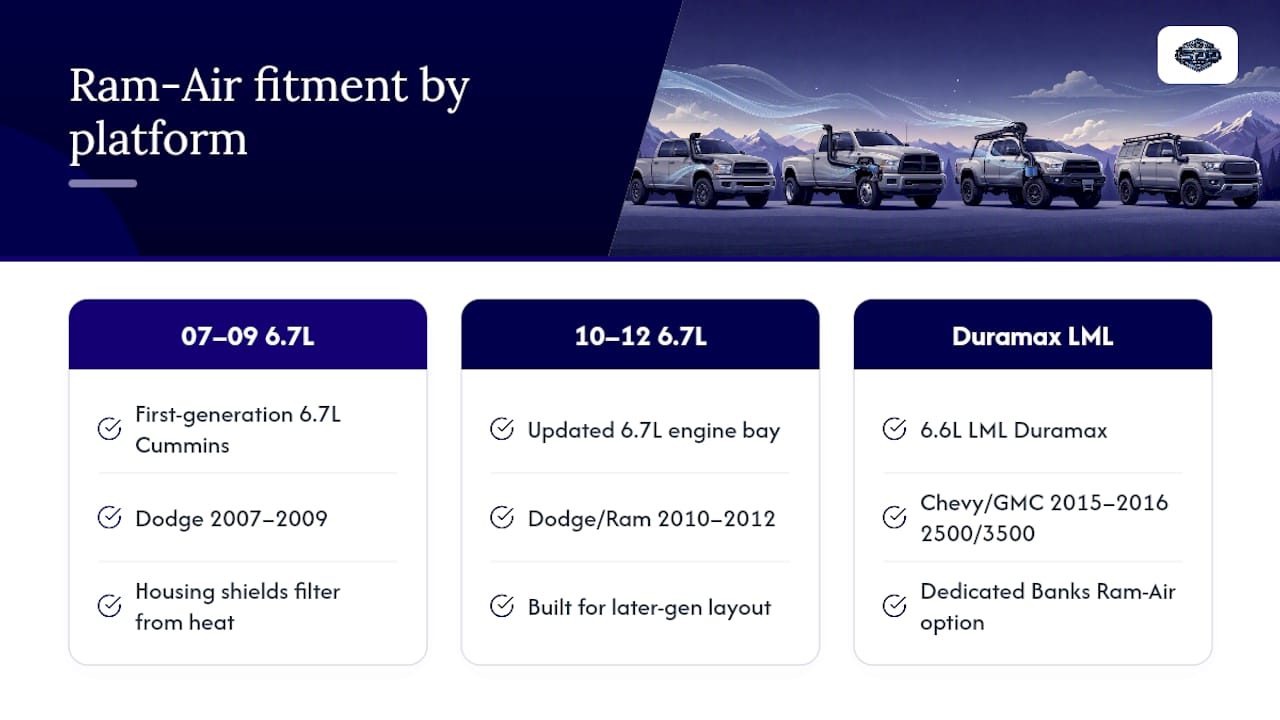
Fitment matters more with diesel trucks than with most gas engines, since turbo placement and engine bay layout vary significantly between generations. The Ram-Air Cold-Air Intake System for 07-09 Dodge 6.7L trucks fits the first-generation 6.7L Cummins layout, while the Ram-Air system for 10-12 Dodge/Ram 6.7L trucks is built for the updated engine bay on that later generation. Duramax owners running the 6.6L LML in 2015 to 2016 Chevy or GMC 2500/3500 trucks have their own dedicated option in the Banks Ram-Air intake for Duramax LML platforms.
Before you order, check your truck’s exact model year and engine code against the product listing, since fitment on diesel intakes is unforgiving compared to universal gas-engine kits. If you’re staging this alongside other upgrades, the diesel performance upgrade checklist walks through where an intake fits relative to a tune, exhaust, or turbo work. Pick your fitment, confirm your engine code, and place your order directly on the product page.
Sources
For deeper technical reading beyond this guide, these sources cover the dyno data, design comparisons, and real-world testing referenced throughout this article:
- Cold Air Intake Gains Explained: What Dyno Data Really Shows
- Autoguide
- Is a Cold Air Intake Worth It? Honest Pros, Cons, and Results
- What are the negatives of a cold air intake? | Ryan’s Auto Care
FAQ
Do Cold Air Intakes Really Make a Difference?
Yes, but the difference is mostly sound and throttle response on stock naturally aspirated engines, with measurable horsepower and torque gains concentrated on turbocharged or heat-soak-prone platforms.
What Are the Negatives of a Cold Air Intake?
The main risks are heat soak in stop-and-go traffic, water ingestion if the filter sits low near splash zones, reduced filtration efficiency with some high-flow media, and MAF sensor fouling from over-oiled filters.
Do Cold Air Intakes Make Exhaust Louder?
A cold air intake changes induction noise, the sound of air rushing into the engine, not exhaust noise, though the sharper intake sound under acceleration can make the whole truck feel louder overall.
Which Trucks See the Biggest Benefit From a Cold Air Intake?
Turbocharged diesel trucks running knock-sensitive tunes, or platforms already dealing with heat soak from a factory intake, tend to see the most consistent, repeatable gains, which is why Banks Power’s Ram-Air systems target specific diesel engine codes.
Do I Need a Tune After Installing a Cold Air Intake?
Most stock ECUs adapt to the added airflow without a tune, but if you’re pairing the intake with other supporting mods like a turbo upgrade, a professional tune helps the ECU use the new airflow correctly.