

Diesel runaway is defined as a critical engine failure where the engine draws fuel from an unintended source, causing it to overspeed uncontrollably beyond its design limits. Unlike a gasoline engine, a diesel ignites fuel through compression alone. That means any combustible material entering the intake can feed combustion, completely bypassing the electronic governor and fuel injection system. The result is an engine that accelerates on its own, ignores the ignition key, and risks destroying itself from the inside out. Understanding what is diesel runaway, and how to respond to it, is a safety-critical skill for every diesel truck owner and enthusiast.
What causes diesel engine runaway?
Diesel engine runaway starts when the engine finds a fuel source outside its controlled injection system. That source can come from inside the engine or from the surrounding environment.
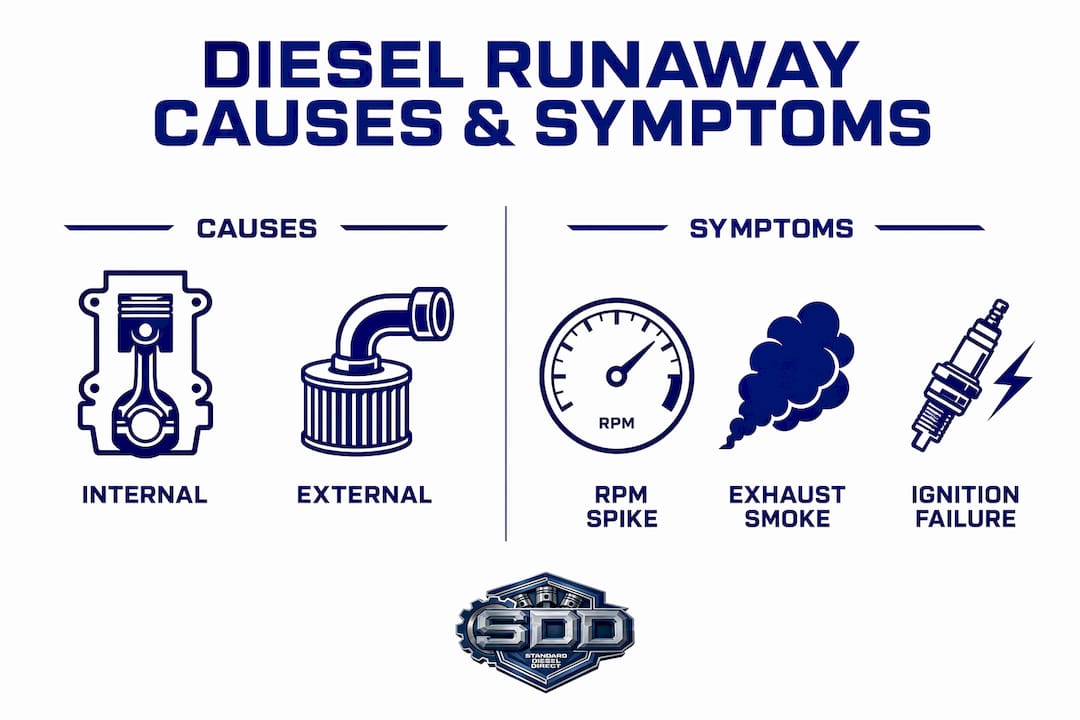
Internal causes
The most common internal trigger is turbocharger seal failure. When the seals on a turbo wear out, engine oil migrates into the intake tract. That oil is combustible, and the engine burns it just like diesel fuel. Piston ring wear creates a similar problem. Worn rings allow crankcase blow-by gases, which are oil-laden vapors, to enter the intake through the crankcase ventilation (CCV) system. An overfilled crankcase makes this worse by increasing the volume of oil vapor available for combustion.
External causes
External combustible vapors can trigger runaway independently of any mechanical fault inside the engine. A diesel running near a natural gas leak, a fuel spill, or shop solvents can ingest those vapors through the air intake. The engine treats them as fuel and accelerates accordingly. This is a documented hazard in mining, oil field, and industrial settings where flammable gases are present in the work environment.
The common thread across all causes is the same: the engine’s electronic governor controls fuel injection, but it cannot control a fuel source entering through the air intake. Once combustion is fed by an unintended source, the governor loses authority over engine speed.
Common causes at a glance:
-
Turbocharger seal failure allowing oil into the intake
-
Worn piston rings producing excessive blow-by gases
-
Faulty or clogged crankcase ventilation (CCV) system
-
Engine oil overfill increasing vapor pressure in the crankcase
-
Ingestion of external flammable vapors (gas leaks, solvents, dust)
-
Damaged intake ducting exposing the engine to environmental vapors
Pro Tip: Inspect your turbocharger shaft for lateral play every 30,000 miles. Excessive play is an early sign of bearing wear that leads to seal failure. Catching it early costs a fraction of a full turbo replacement and eliminates one of the most common runaway triggers. For a deeper look at how turbo health affects engine performance, the turbo lag guide at Standard Diesel Direct covers the mechanics in detail.
What are the symptoms and warning signs of diesel runaway?
Recognizing a runaway event early gives you the best chance to respond safely. The warning signs are distinct and escalate quickly once the condition begins.

The most immediate symptom is a sudden, uncontrolled spike in engine RPM with no input from the accelerator pedal. The engine sounds like it is being floored, but your foot is not on the gas. Thick white or blue smoke pours from the exhaust as the engine burns oil or other unintended fuel. The smoke is often the first visual cue visible to bystanders before the driver fully registers what is happening.
High oil consumption is a slower-developing warning sign that often precedes a runaway event. If your diesel is burning through oil between changes without a visible external leak, the oil is likely entering the combustion chamber through worn rings or a failing turbo seal. Unusual noises from the turbocharger, including whistling, grinding, or a rising whine that does not match throttle input, also signal a problem that can escalate into runaway.
| Symptom | Associated cause |
|---|---|
| Sudden RPM spike with no throttle input | Engine feeding on unintended fuel source |
| Thick white or blue exhaust smoke | Oil or external vapor burning in combustion |
| Rapid, unexplained oil consumption | Worn piston rings or turbo seal failure |
| No response to ignition key-off | Engine bypassing normal fuel shutoff controls |
| Turbocharger whistling or grinding | Bearing wear leading to seal failure |
| Engine noise escalating without throttle | Overspeed condition from uncontrolled combustion |
One symptom stands out as the most dangerous confirmation of a true runaway: turning the ignition key off has no effect. The engine keeps running because it is not drawing from the controlled fuel injection system. At that point, emergency action is required immediately.
How to safely stop a runaway diesel engine?
Stopping a runaway diesel requires cutting off its fuel supply. Since the fuel is entering through the air intake, the only reliable method is to starve the engine of air.
The primary and safest method is an Emergency Positive Air Shutoff (EPAS) valve. This is a butterfly valve installed in the intake tract that closes completely when activated, cutting airflow to the engine. Industrial and commercial diesels in high-risk environments often have these installed as standard equipment. If your truck does not have one, a rigid, non-flammable plate held firmly over the air intake achieves the same result.
-
Activate the EPAS valve if one is installed. This is the fastest and safest shutdown method.
-
Use a rigid, non-flammable plate to block the air intake if no EPAS valve is present. Hold it firmly against the intake opening until the engine dies.
-
Deploy a CO2 fire extinguisher into the air intake as a secondary option. CO2 displaces oxygen and can starve combustion. Avoid dry chemical extinguishers, as the powder causes serious engine damage.
-
Dump the clutch in a manual transmission as a last resort. Engaging a high gear and releasing the clutch abruptly can stall the engine by loading the drivetrain. This method risks transmission damage but can save the engine from self-destruction when no other option is available.
-
Evacuate the area if you cannot safely stop the engine. A runaway diesel can destroy itself in seconds and throw debris at high velocity.
Blocking the intake with soft material is dangerous. The engine’s vacuum suction can pull soft rags or foam directly into the intake, injuring the person holding them and potentially feeding the fire. Always use a rigid plate.
Turning off the ignition is ineffective during a true runaway event. The engine is not drawing from the injection system, so cutting electrical power to the injectors does nothing to stop combustion. This is the most common mistake operators make in the first seconds of a runaway.
Pro Tip: If you operate a diesel in an industrial or high-risk environment, install an EPAS valve and train every operator on its location and use before an emergency occurs. The Government of Ontario Safety Alert specifically recommends automatic gas detection and overspeed protection systems for environments with combustible gases or dust. Preparation is the only reliable safety measure.
Prevention tips and maintenance to avoid diesel runaway
The best defense against a runaway event is a well-maintained engine. Most runaway incidents trace back to mechanical wear that built up over time and was never caught during routine service.
Turbocharger health sits at the top of the prevention list. A turbo with worn bearings develops seal leaks that feed oil directly into the intake. Regular inspection of the turbo shaft for lateral play, along with checking for oil residue inside the intake ducting, catches this problem before it becomes dangerous.
Crankcase ventilation health and oil level management are equally critical. A clogged CCV system builds pressure in the crankcase and forces oil vapor into the intake at a higher rate. Replacing the CCV filter on schedule and never overfilling the crankcase removes two of the most common internal runaway triggers.
Diesel runaway prevention checklist:
-
Inspect turbocharger shaft for lateral play every 30,000 miles
-
Check intake ducting for oil residue at every oil change
-
Replace the crankcase ventilation (CCV) filter on the manufacturer’s recommended schedule
-
Never overfill the engine oil above the full mark on the dipstick
-
Monitor oil consumption between changes and investigate any unexplained loss
-
In industrial settings, install automatic gas detection equipment near diesel-powered machinery
-
Consider an EPAS valve installation for high-risk applications or remote work environments
-
Address any exhaust smoke immediately rather than monitoring it over multiple service intervals
Monitoring oil consumption is one of the most underused diagnostic tools available to diesel owners. A diesel that burns a quart of oil every 1,000 miles is signaling a problem. That problem will not fix itself, and it is moving the engine closer to a runaway condition with every mile.
Reliable fuel systems from Standard Diesel Direct
A clean, controlled fuel delivery system is one of the most direct ways to protect your diesel’s long-term health. When fuel delivery is inconsistent or contaminated, the engine compensates in ways that accelerate wear on seals, injectors, and the turbocharger.

Standard Diesel Direct carries the FASS Titanium Signature Series fuel systems, built to deliver clean, air-free, water-free fuel at consistent pressure. The FASS TSD11140F110G Titanium Signature Series is engineered for Ram 1500 EcoDiesel owners who want stable fuel delivery and reduced injector wear. For Duramax owners, the FASS TSC13250F220G Titanium Signature Series delivers 220 GPH of filtered, conditioned fuel to support both daily driving and performance builds. Reliable fuel delivery does not prevent every runaway risk, but it keeps your engine running at the conditions it was designed for, reducing the mechanical stress that leads to seal and ring wear over time.
FAQ
What is diesel runaway in simple terms?
Diesel runaway is when a diesel engine feeds on an unintended fuel source, such as engine oil or external vapors, and accelerates beyond control. The driver cannot stop it with the ignition key or throttle.
What are the first signs of diesel runaway?
The first signs are a sudden RPM spike with no throttle input and thick white or blue exhaust smoke. Unusual turbocharger noise often appears in the seconds before the RPM climbs.
Why does turning the key off not stop a runaway diesel?
Turning the ignition off cuts power to the fuel injectors, but the engine is burning an unintended fuel source entering through the air intake. Cutting injector power has no effect on that combustion.
How do you stop a runaway diesel safely?
The safest method is activating an EPAS valve or blocking the air intake with a rigid, non-flammable plate to starve the engine of air. A CO2 fire extinguisher directed into the intake is a secondary option.
Can diesel runaway be prevented?
Yes. Regular inspection of turbocharger seals, proper crankcase ventilation maintenance, and careful oil level management eliminate the most common internal triggers. In industrial environments, automatic gas detection and overspeed protection systems address external vapor risks.
Key takeaways
Diesel runaway is a preventable emergency. Routine maintenance and a clear emergency response plan are the two factors that determine the outcome.
| Point | Details |
|---|---|
| Core definition | Runaway occurs when a diesel burns an unintended fuel source and overspeeds beyond driver control. |
| Ignition key is ineffective | Turning the key off does not stop runaway because the engine bypasses the injection system entirely. |
| Air starvation stops it | An EPAS valve or rigid plate over the intake is the safest and most reliable shutdown method. |
| Turbo seals are the top internal risk | Worn turbocharger seals allow oil into the intake and are the leading internal cause of runaway. |
| Maintenance prevents most events | CCV filter replacement, oil level control, and turbo inspections eliminate the majority of runaway triggers. |
Recommended
-
What Is Diesel Turbo Lag? Causes, Fixes, and Tuning – Standard Diesel Direct
-
Diesel Lift Pump Performance, Failure, Benefits, Upgrades, and Buying Guide – Standard Diesel Direct
-
What Is “Death Wobble”? A Straightforward Guide for Truck Owners – Standard Diesel Direct
-
Diesel Particulate Filter Explained for Truck Owners – Standard Diesel Direct