

Replacing a diesel turbocharger typically runs $2,300 to $2,900 for most light-duty pickups when you factor parts and labor together, according to industry cost data. Medium-duty trucks land around $2,000 to $3,500, and Class 8 heavy-duty jobs range from $2,800 to $5,300 with reman or aftermarket parts, climbing to $6,500 to $11,000+ if you insist on new OEM dealer components.
Before you authorize any of that spending, run a targeted diagnostic. A boost-pressure test, a smoke test for leaks, and a code read catch the boost-path problems that get misdiagnosed as turbo failure far more often than owners expect, per diagnostic guidance from GoldfarbInc.
- Full replacement is usually justified when the bearing has failed, the shaft has play, or the VGT vanes are physically damaged.
- Cheaper fixes (actuator service, hose repair, intercooler cleaning) solve a surprising number of “turbo problems” for a few hundred dollars instead of a few thousand.
Pro Tip: Standard Diesel Direct sees this pattern constantly: owners replace a perfectly good turbo because nobody checked the charge-air hoses first.
Key Takeaways
Diesel turbo replacement typically costs $2,300 to $2,900 for light-duty pickups, but a proper boost and leak diagnostic before replacement often saves owners from paying for a repair they didn’t need.
| Point | Details |
|---|---|
| Diagnose before replacing | Run a boost-pressure test, smoke test, and code read; many “turbo failures” are hoses, intercoolers, or actuators. |
| Typical total cost | Light-duty pickups run $2,300 to $2,900; heavy-duty jobs range from $2,800 to $11,000+ depending on parts channel. |
| Reman is often the best value | Certified remanufactured turbos balance cost and warranty better than new OEM or uncertified used units. |
| Engine layout drives labor | Valley-mounted turbos on Powerstroke and Duramax platforms need more labor hours than accessible Cummins or EcoDiesel setups. |
| Source ancillary parts carefully | Standard Diesel Direct offers fitment-verified oil lines, intercooler parts, and engine components for Cummins, Powerstroke, Duramax, and EcoDiesel trucks. |
What Changes Your Diesel Turbo Replacement Price
Two nearly identical trucks can generate quotes $1,500 apart, and the gap almost always traces back to five variables.
Turbo type matters most. A fixed-geometry turbo is mechanically simple. A variable-geometry turbo (VGT), common on newer Cummins, Powerstroke, and Duramax platforms, adds an electronic actuator, vane linkages, and a calibration step that fixed-geometry units never need.
Part channel comes next. OEM dealer parts sit at the top of the price ladder, aftermarket OE-spec units sit in the middle, certified remanufactured turbos often deliver the best value, and used or uncertified units carry the most risk for the lowest price.
Labor hours and shop rate multiply everything else. A shop charging $150 an hour on a two-hour job costs less than one charging $110 an hour on a four-hour job, and engine layout decides which shop you get.
Accessibility drives those hours directly. Some engines expose the turbo with a few bolts removed; others require manifold removal or a cab lift.
Watch for these add-ons that inflate a “simple” quote:
- Actuator replacement (often bundled with VGT jobs)
- Boost and position sensors
- Oil-feed and return lines
- VGT calibration procedure
- Seized exhaust manifold bolts that snap on removal
Pro Tip: Ask whether your quote is flat-rate or hourly. Flat-rate protects you on hard jobs; hourly protects the shop when bolts cooperate. On a rust-belt truck with seized exhaust hardware, flat-rate almost always favors you.
How Much Do Replacement Turbo Parts Cost?
The part itself is only one line on the invoice, but it’s the line that varies most. AmpAuto’s cost mapping shows just how wide that range gets: actuator service or cleaning often runs $300 to $800, while a full bearing or turbo replacement commonly lands between $2,000 and $3,500 or more depending on the application.
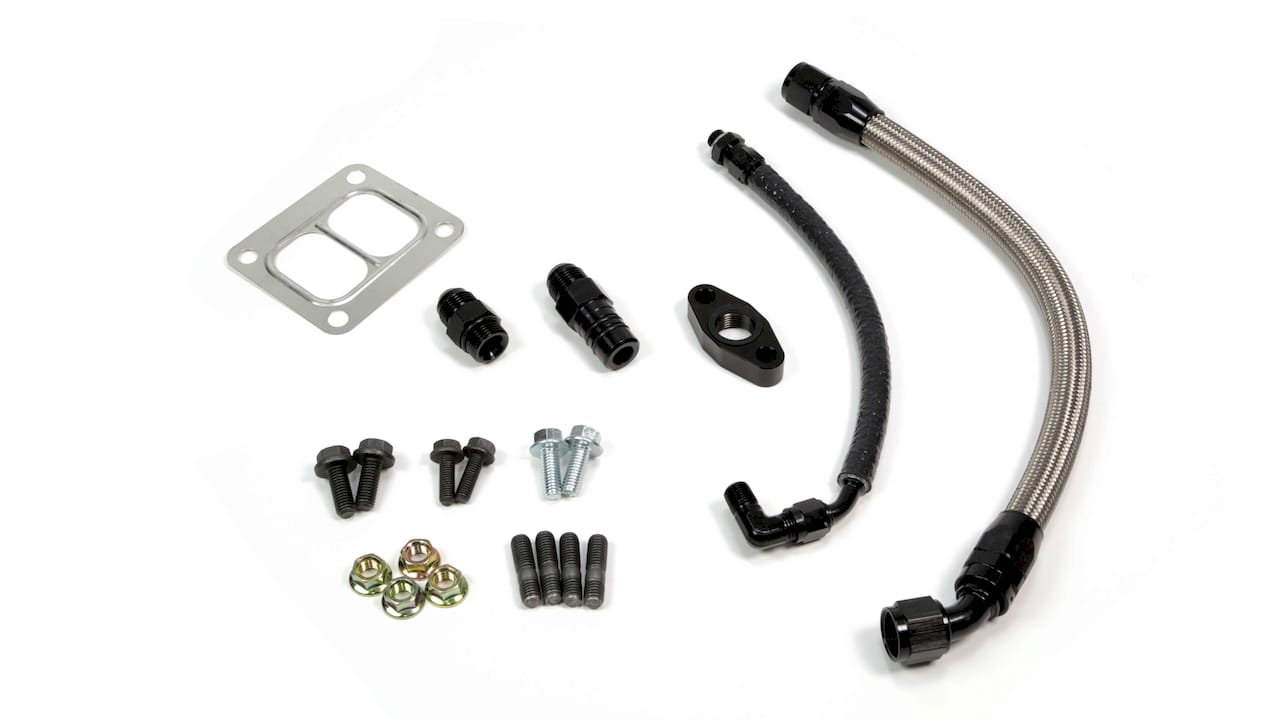
New OEM units carry dealer pricing and the tightest fitment guarantee, but you pay for the badge. OE-spec aftermarket turbos, built to the same tolerances by a different manufacturer, usually save you 20 to 40 percent without sacrificing much reliability. Certified remanufactured units go through teardown, bearing replacement, and dynamic balancing, and they typically come with a warranty that rivals new OEM parts at a fraction of the cost. That combination makes reman the default recommendation for most owners weighing value against risk.
Used, uncertified turbos are the wild card. You might get a good core for cheap, or you might install a unit with hidden shaft wear that fails again in six months. Rebuild kits sit at the bottom of the price ladder but demand a competent machine shop and a turbo whose housings and vanes are still in good shape.
Always match the nameplate and casting number, not just the part-number listing on a website. Two turbos that look identical can have different actuator calibrations or vane geometry, and a mismatched unit will throw codes even when it physically bolts on.
Labor Costs and Engine-Specific Turbo Replacement Prices
Shops price this job one of two ways: flat-rate, where you pay a set number of hours regardless of how the job actually goes, or hourly, where the clock runs on whatever the technician encounters. Shop rates generally fall between $100 and $180 an hour depending on region and dealer versus independent status. What multiplies that rate is access time, and access time depends almost entirely on your engine.
A 6.7L Cummins in a Ram pickup typically needs 2 to 4 labor hours for a straightforward swap, since the turbo sits reasonably accessible on top of the engine. Combined with a mid-range reman part, total cost usually lands in the $2,300 to $3,200 range.
Powerstroke platforms vary more by generation. The 6.0L and 6.4L twin-turbo (compound turbo on the 6.4L) setups mount in the engine valley, which means more disassembly and more labor hours, often 4 to 7. Expect $2,800 to $4,200 total on these platforms once you add VGT calibration.
Duramax trucks (6.6L) face a similar valley-mount challenge, and the charge-air plumbing running through that space adds time just to get the old unit out. Expect labor in the 3 to 6 hour range and totals around $2,600 to $3,800.
EcoDiesel engines (3.0L in Ram 1500) are smaller and more accessible than the heavy-duty engines above, which keeps labor closer to 2 to 3 hours and totals in the $2,000 to $2,800 band, assuming no compounding issues.
| Engine Family | Typical Labor Hours | Part + Labor Total (typical) |
|---|---|---|
| 6.7L Cummins | 2 to 4 hours | $2,300 to $3,200 |
| 6.0L / 6.4L Powerstroke | 4 to 7 hours | $2,800 to $4,200 |
| Duramax (6.6L) | 3 to 6 hours | $2,600 to $3,800 |
| EcoDiesel (3.0L) | 2 to 3 hours | $2,000 to $2,800 |
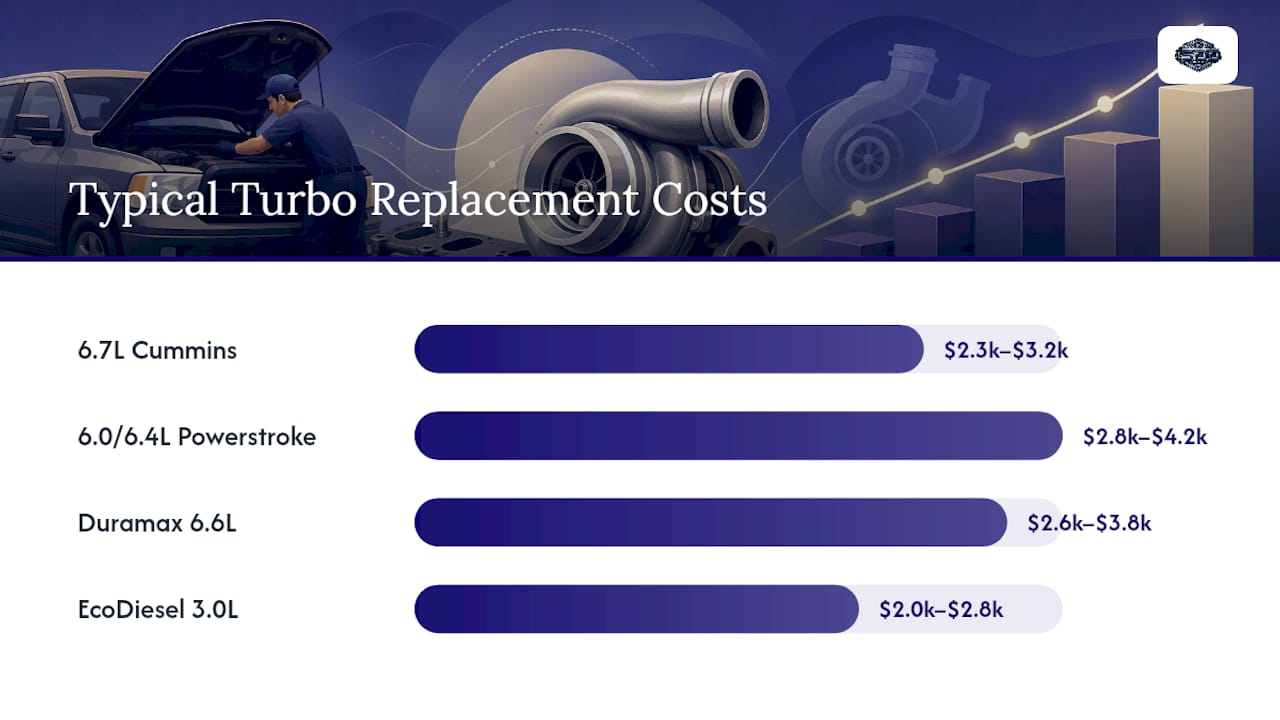
Three things push any of these numbers higher: seized exhaust manifold bolts that snap during removal, twin-turbo or compound configurations that require cab lifts on some platforms, and heavy-duty VGT units that need dealer-level scan tools for actuator calibration after installation.
What Are the Signs of a Failing Diesel Turbo?
Real turbo failure has a signature, and it rarely shows up as just one symptom.
- Noticeable loss of boost or power under load, especially climbing grades or towing.
- Blue or black smoke from the exhaust, particularly when accelerating hard.
- A whining, grinding, or high-pitched noise from the turbo’s general location.
- Oil pooling in the intercooler piping or charge tubes.
- Check-engine codes tied to boost control, VGT position, or overboost/underboost conditions.
Before you assume the worst, run a few checks yourself:
- Pop the intercooler hose and look for wet, oily residue, a strong sign of a failing turbo seal.
- Watch the tailpipe under a hard pull; sustained blue smoke points to oil getting past the turbo into the exhaust.
- Check for visible oil leaks at the turbo housing or the oil-feed line fittings.
Here’s the trap that costs owners real money: a cracked charge-air hose, a clogged or failing intercooler, or even an EGR or MAF sensor fault can mimic every symptom on that list. Skipping a proper diagnostic and jumping straight to a turbo swap means you might spend $2,500 and still have the same drivability problem afterward.
What Diagnostic Tests Confirm a Bad Turbo?
A competent shop follows a sequence, not a guess. Ask for these steps before you approve any replacement:
- Code read — pulls stored and pending codes tied to boost, VGT position, or turbo speed sensors.
- Boost-pressure test under load — a road test or dyno pull with a gauge confirms whether you’re actually hitting spec boost.
- Smoke test — pressurizes the intake and charge-air system to find leaks at hoses, clamps, and the intercooler itself.
- Compressor and turbine wiggle test — checks for shaft play, a direct sign of bearing wear.
- Actuator function check — verifies the VGT actuator moves smoothly through its full range without sticking.
- Oil-feed pressure and supply inspection — confirms the turbo was actually getting adequate lubrication, which points to the real root cause.
- Intercooler inspection — checks for oil contamination or physical damage that would explain smoke or boost loss.
Pro Tip: A boost reading that falls 20 to 30 percent below spec under load, combined with a wiggle test that shows any perceptible shaft play, is about as close to a confirmed diagnosis as you’ll get without pulling the turbo.
Before signing off on replacement, ask the shop to try the cheap fixes first: actuator cleaning, hose and clamp repair, or an intercooler flush. A stuck VGT vane often presents identically to a failing bearing, and cleaning the actuator linkage solves it for under $100 in parts.
Should You Rebuild, Buy Reman, or Go New OEM?
Rebuilding makes sense when you’re dealing with a fixed-geometry turbo whose housings and shaft bore are still in good condition, since a machine shop can replace the bearings and reuse the expensive castings. It rarely makes sense on VGT units, where damaged vanes, worn actuator linkages, or electronic faults are common failure points that a basic rebuild kit doesn’t address.
Certified reman typically gives you the best balance of cost and risk. You get a professionally balanced unit, a warranty, and a price well below new OEM. New OEM makes sense mainly when you’re chasing the longest possible warranty or when a reman core isn’t available for your specific application yet, which happens occasionally with newer VGT designs.
Quick rules of thumb:
- High-mileage truck (150,000+ miles) with other wear signs: reman is the safer bet than a rebuild.
- Fixed-geometry turbo with intact housings and low total mileage: rebuild can save real money.
- Reman unavailable or backordered for your platform: new OEM becomes the practical choice despite the price.
- Watch the core charge either way; a $300 core fee returned late can erase most of your savings.
Can You Replace a Diesel Turbo Yourself?
If your engine gives reasonable access, a mechanically confident owner can handle a turbo swap. Removing and installing the turbo, swapping gaskets, and replacing oil and coolant lines are all within reach for someone comfortable with a torque wrench and a service manual. VGT actuator calibration, seized exhaust bolt removal, and any job requiring a cab lift belong with a professional shop that has the right scan tools and experience.
The upside: you save the entire labor line, often $400 to $900 depending on your platform.
The downside: you lose any labor warranty a shop would have offered, you risk improper balancing if you’re rebuilding rather than swapping a complete unit, and the job eats a full weekend rather than a few shop hours.
Minimum tool checklist: a full metric socket set, a torque wrench, penetrating oil for exhaust hardware, a shop manual for your specific engine, and ideally a scan tool capable of reading boost and VGT data. Work only on a cold engine; exhaust components and pressurized oil lines stay dangerous long after shutdown.
Pro Tip: If your only tool for seized exhaust bolts is a breaker bar and hope, budget for a professional shop instead. Snapped manifold studs turn a 3 hour job into a 6 hour job fast.
How to Lower Your Turbo Replacement Bill
A few decisions before you hand over a credit card can save several hundred dollars without cutting corners on quality.
- Get a second quote, especially if the first shop is pushing new OEM parts without mentioning reman as an option.
- Choose a certified reman turbo over new OEM when your platform has one available; the warranty gap is usually small.
- Replace oil-feed and return lines while the turbo is off the truck rather than paying separate labor for it later.
- Confirm the actuator is included in the reman or aftermarket kit; some listings sell it separately.
- Ask about the core-return window before you pay, since a missed deadline forfeits your core refund.
To keep the next turbo lasting, Cummins’ own failure diagnosis guidance recommends idling 2 to 3 minutes before shutdown to let the bearing system cool, since hot shutdown and degraded oil quality are common causes of carbon buildup and premature failure. Stick to the correct oil grade, keep up with filter changes, and confirm oil-feed integrity any time you touch the turbo. Done right, diesel turbos can run well past 150,000 miles, since oil-related issues account for most premature failures rather than simple wear.
- Use the oil grade specified for your engine, not whatever’s cheapest at the parts store.
- Change oil and filters on schedule, especially if you tow or run hard regularly.
- Watch for soot buildup in VGT vanes; it’s often the early warning sign before a vane actually sticks.
How Long Does the Job Take and What Should Warranties Cover?
A straightforward pickup turbo swap typically takes half a day to a full day in shop hours, though calendar time stretches to several days if the part has to be ordered. Heavy-duty VGT jobs with calibration requirements run closer to a full day of shop time.
Warranty length tracks the part channel: new OEM often carries 12 to 24 months, certified reman usually matches that range, and aftermarket units typically land at 12 months. Labor warranties are separate and often shorter, so ask specifically what happens if the installation fails rather than the part itself.
Questions worth asking any shop before you commit:
- Is this quote flat-rate or hourly, and what happens if it runs over?
- Which parts are included: actuator, gaskets, oil lines?
- Who performs the VGT calibration, and is it included in labor?
- What’s the core-return policy, and what’s the deadline?
If the total is stretching your budget, some shops accept financing options like CareCredit for larger repair bills.
When Standard Diesel Direct Fits Your Turbo Job
Sourcing the right replacement turbo is only half the equation. The parts around it, oil-feed lines, exhaust hardware, intercooler components, are what actually turn a routine swap into a weekend-long headache when they’re worn out or mismatched. Standard Diesel Direct stocks vehicle-specific fitment parts and ancillary components for Cummins, Powerstroke, Duramax, and EcoDiesel platforms, backed by technical guidance instead of a guessing game at checkout.
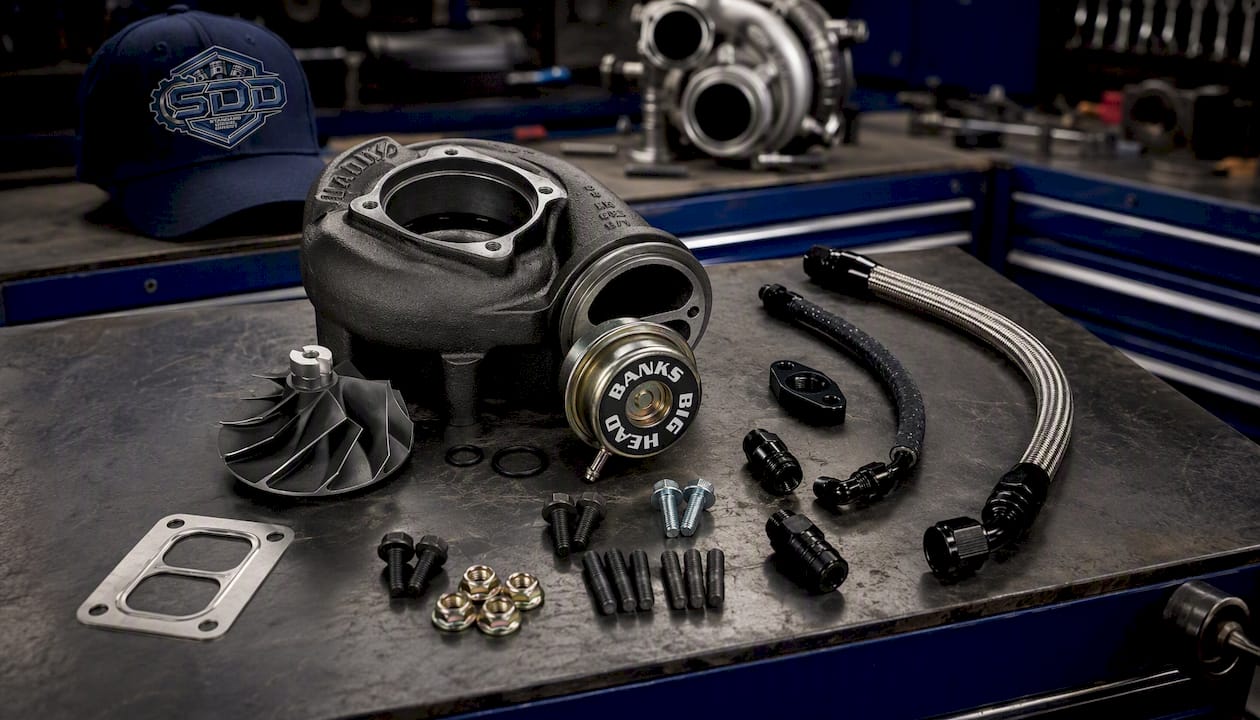
If your quote includes replacing oil lines, intercooler hardware, or exhaust components alongside the turbo itself, browse fitment-verified parts built for your exact engine rather than generic listings that leave you cross-checking casting numbers. For owners tackling broader engine work at the same time, Standard Diesel Direct’s item customization options let you configure parts to your specific truck’s spec before you order, so you’re not stuck troubleshooting a mismatch after the turbo’s already installed.
Sources
- Turbocharger Replacement Cost: 2026 Diesel Price Guide | US Perfect Auto
- Turbocharger failure diagnosis poster (Cummins)
- Diesel Turbo Failure Symptoms (2026): VGT, Bearings, Boost Loss | AmpAuto
- How Long Do Diesel Engine Turbos Tend To Last? (And Can You Extend Their Lifespan?)
- Top 5 signs of a failing turbocharger in your diesel engine
FAQ
Can You Drive a Diesel With a Bad Turbo?
You can sometimes drive short distances with reduced power, but continuing to drive on a failing turbo risks sending metal debris or excess oil into the intake and engine, turning a turbo repair into an engine repair.
Is It Worth Replacing a Turbo?
Replacement is worth it when a diagnostic confirms bearing wear, shaft play, or physical VGT damage, since a properly installed reman or aftermarket unit typically restores full power and can last well past 150,000 miles with good care.
How Long Do Diesel Turbos Usually Last?
With proper oil maintenance and cooldown habits, diesel turbos commonly exceed 150,000 miles, since oil-related issues cause most premature failures rather than normal wear.
How Can You Tell if a Diesel Turbo Is Going Bad?
Watch for reduced power under load, blue or black smoke, whining noise, oil pooling in the intercooler, and boost-related check-engine codes, but confirm with a boost and smoke test since several other issues mimic these symptoms.
Recommended
- Diesel Head Gasket: What Every Diesel Owner Should Know – Standard Diesel Direct
- What Is Diesel Turbo Lag? Causes, Fixes, and Tuning – Standard Diesel Direct
- Diesel Intercooler Upgrade Guide for Truck Owners – Standard Diesel Direct
- Diesel Lift Pump Performance, Failure, Benefits, Upgrades, and Buying Guide – Standard Diesel Direct